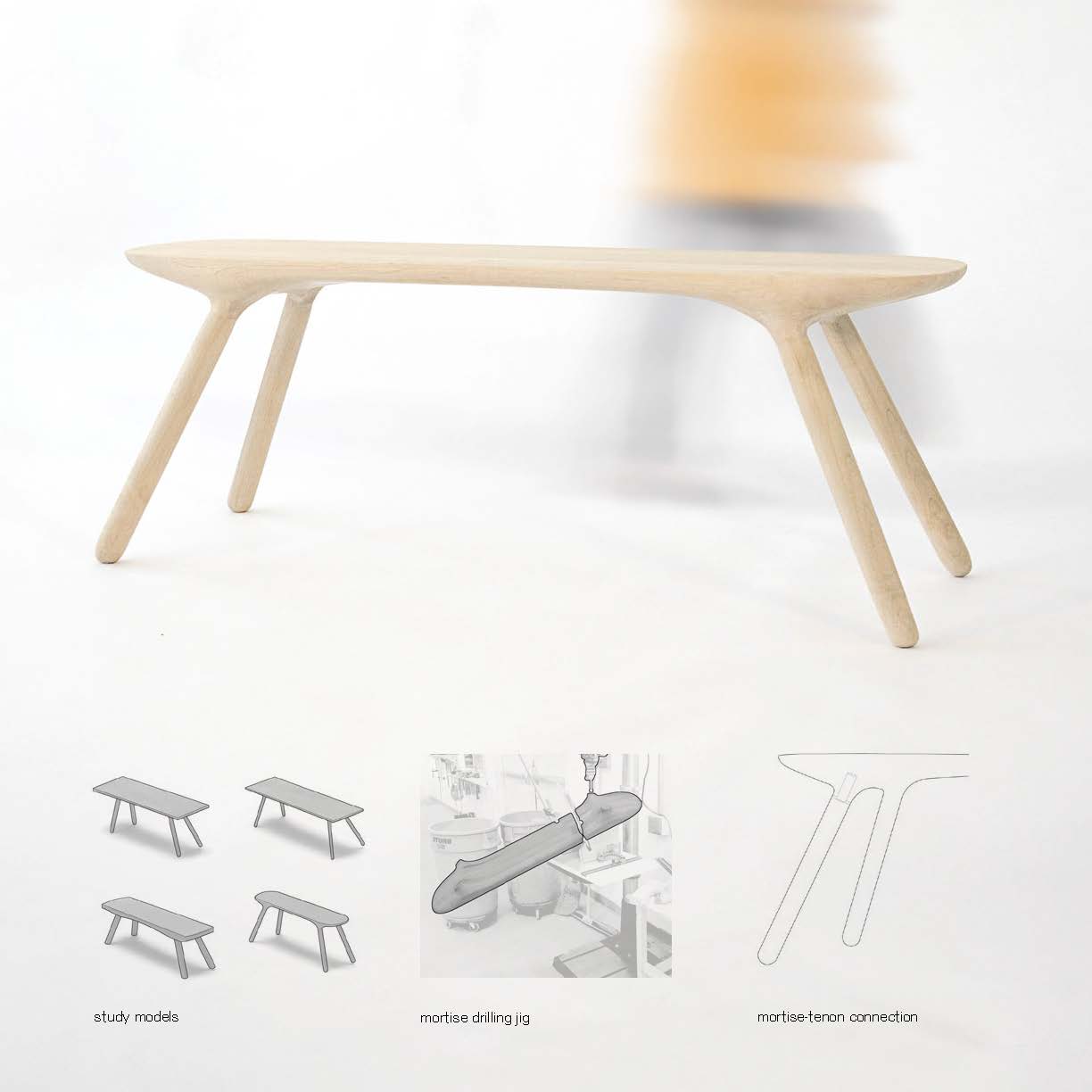
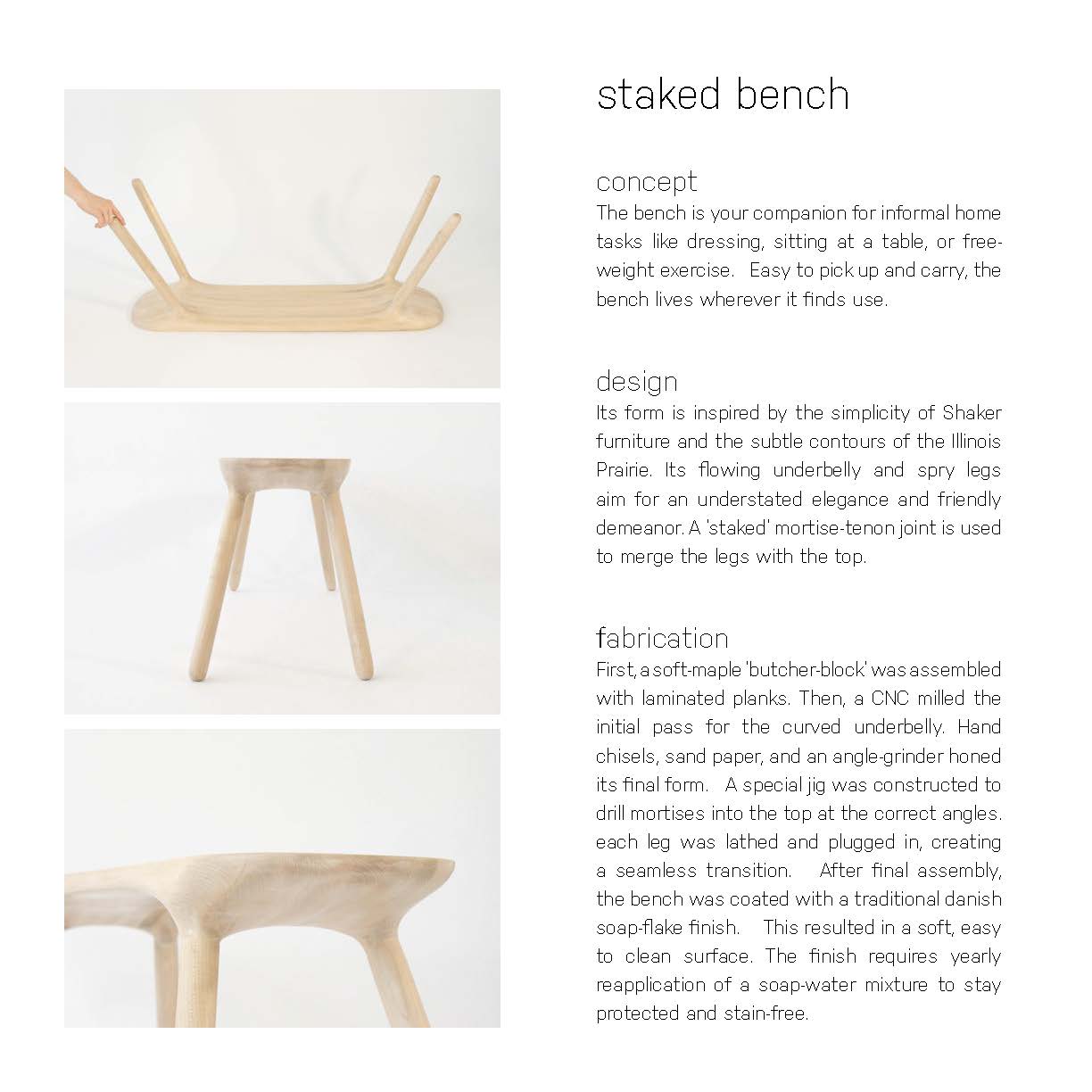
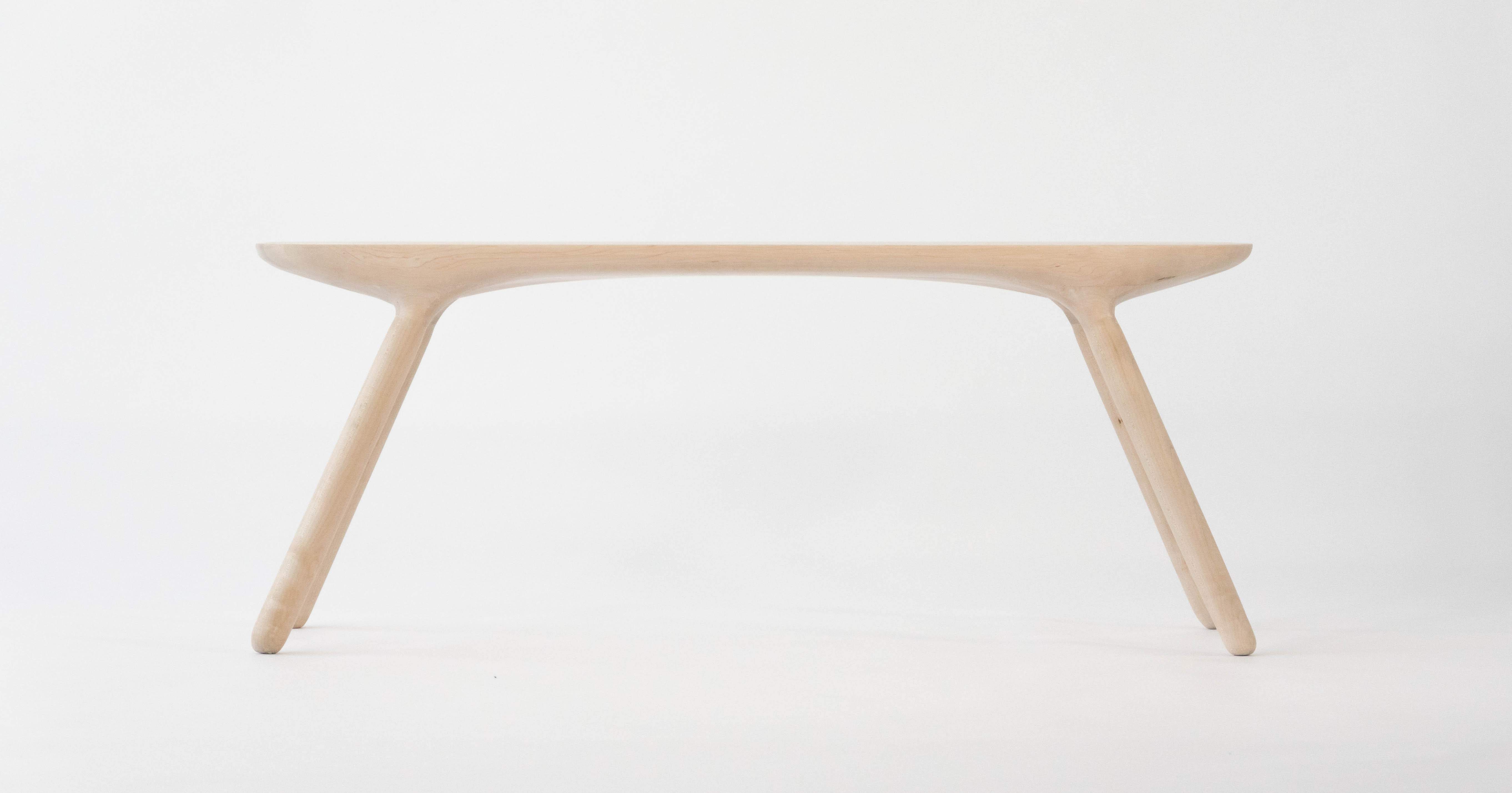
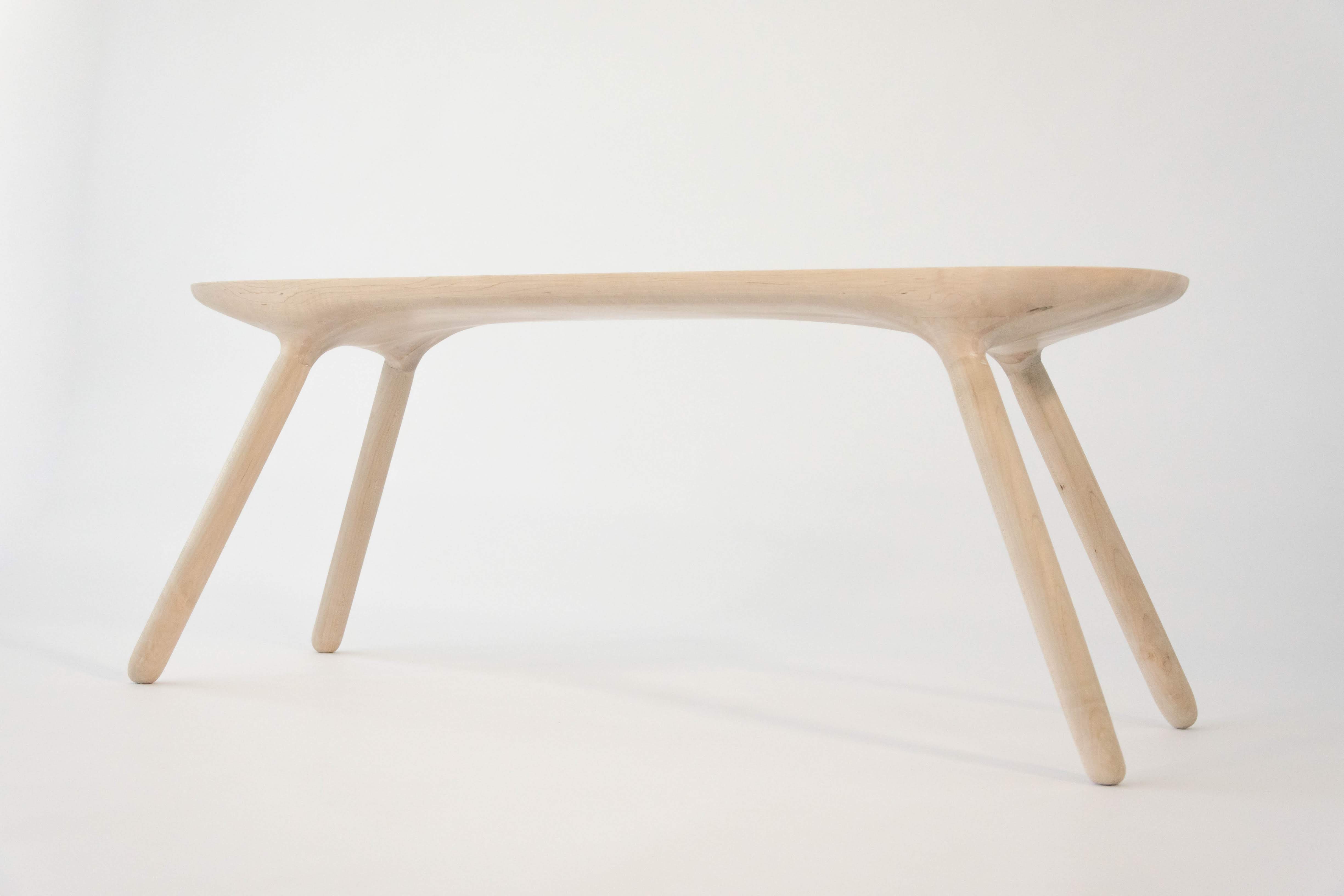
Staked Bench
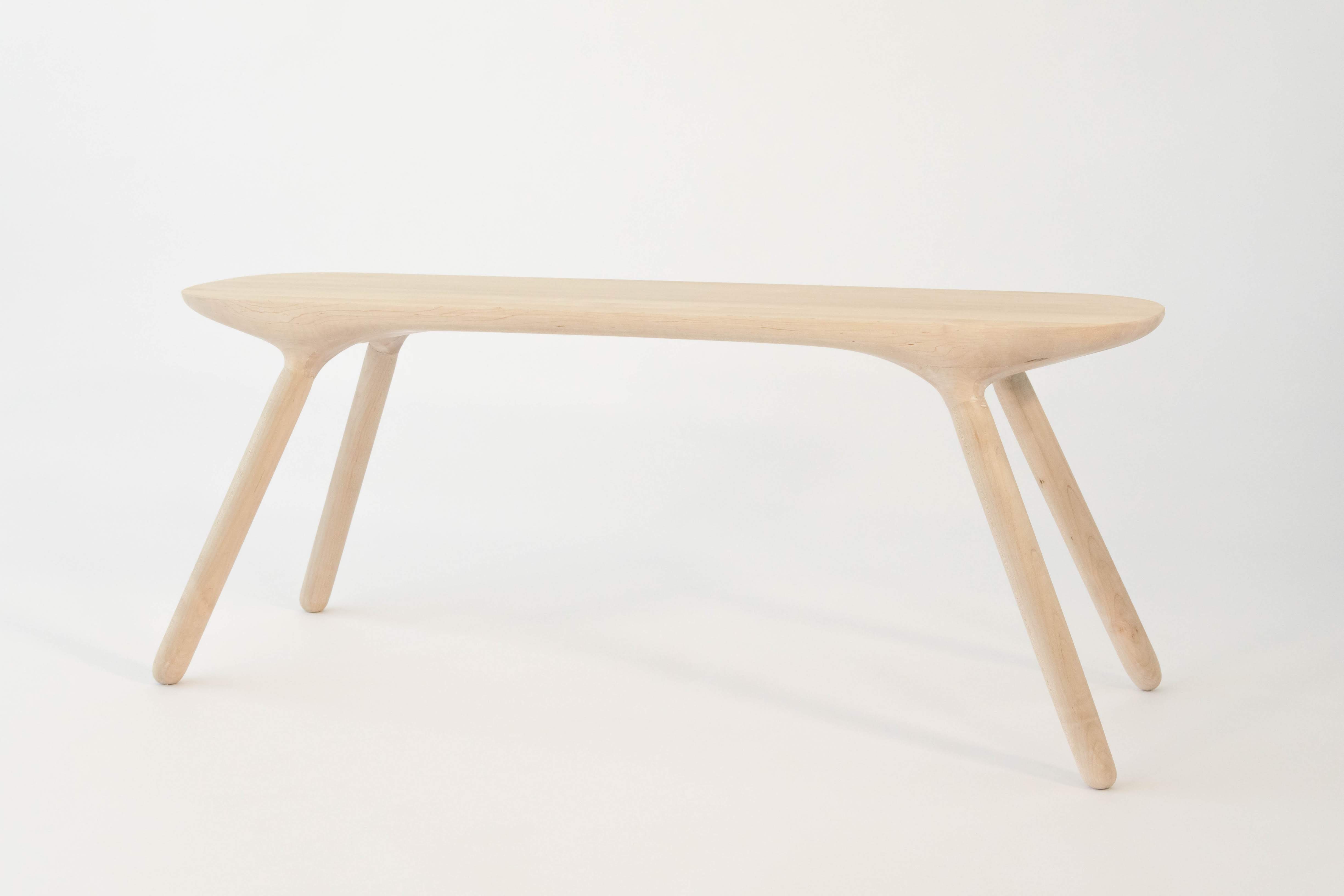
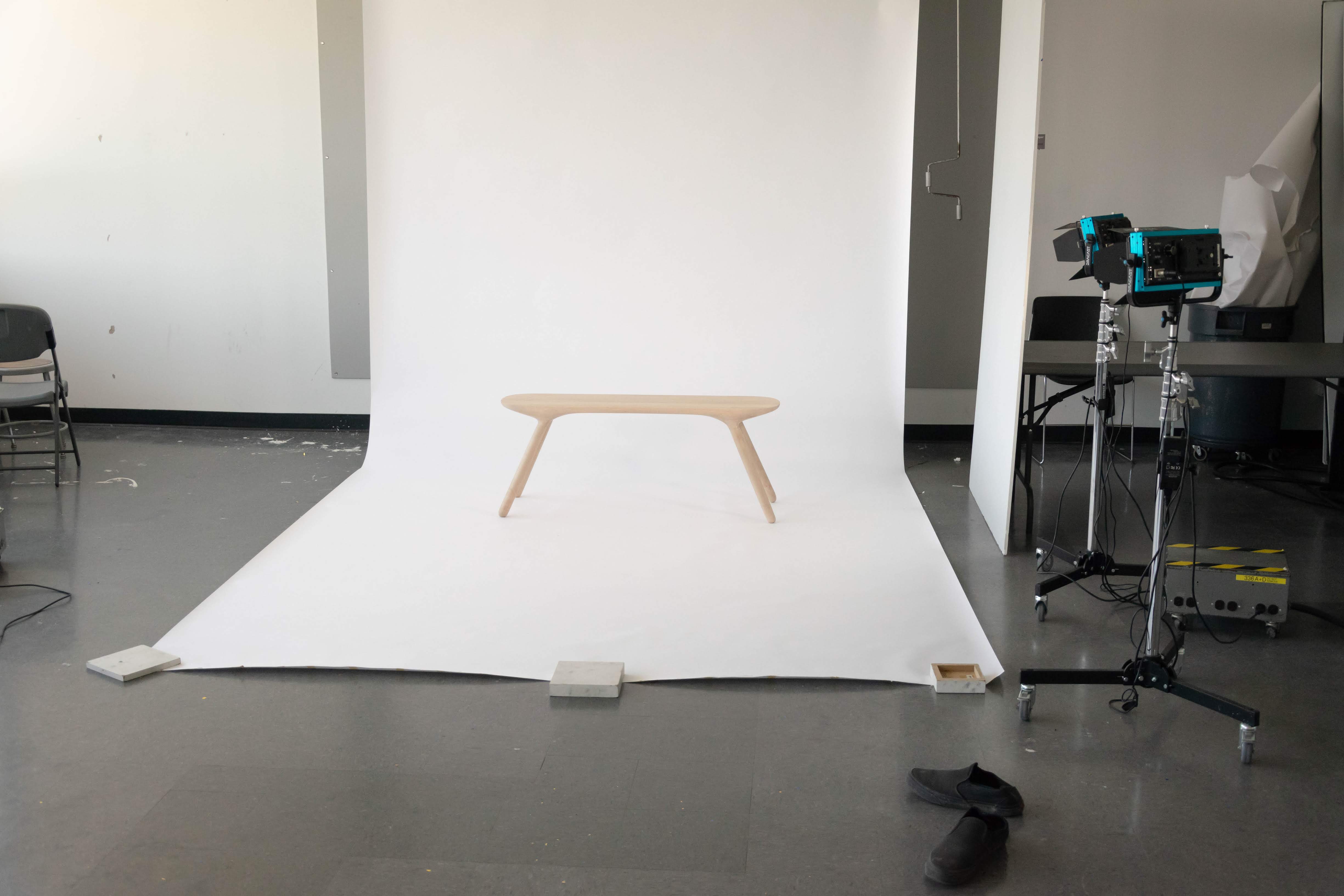
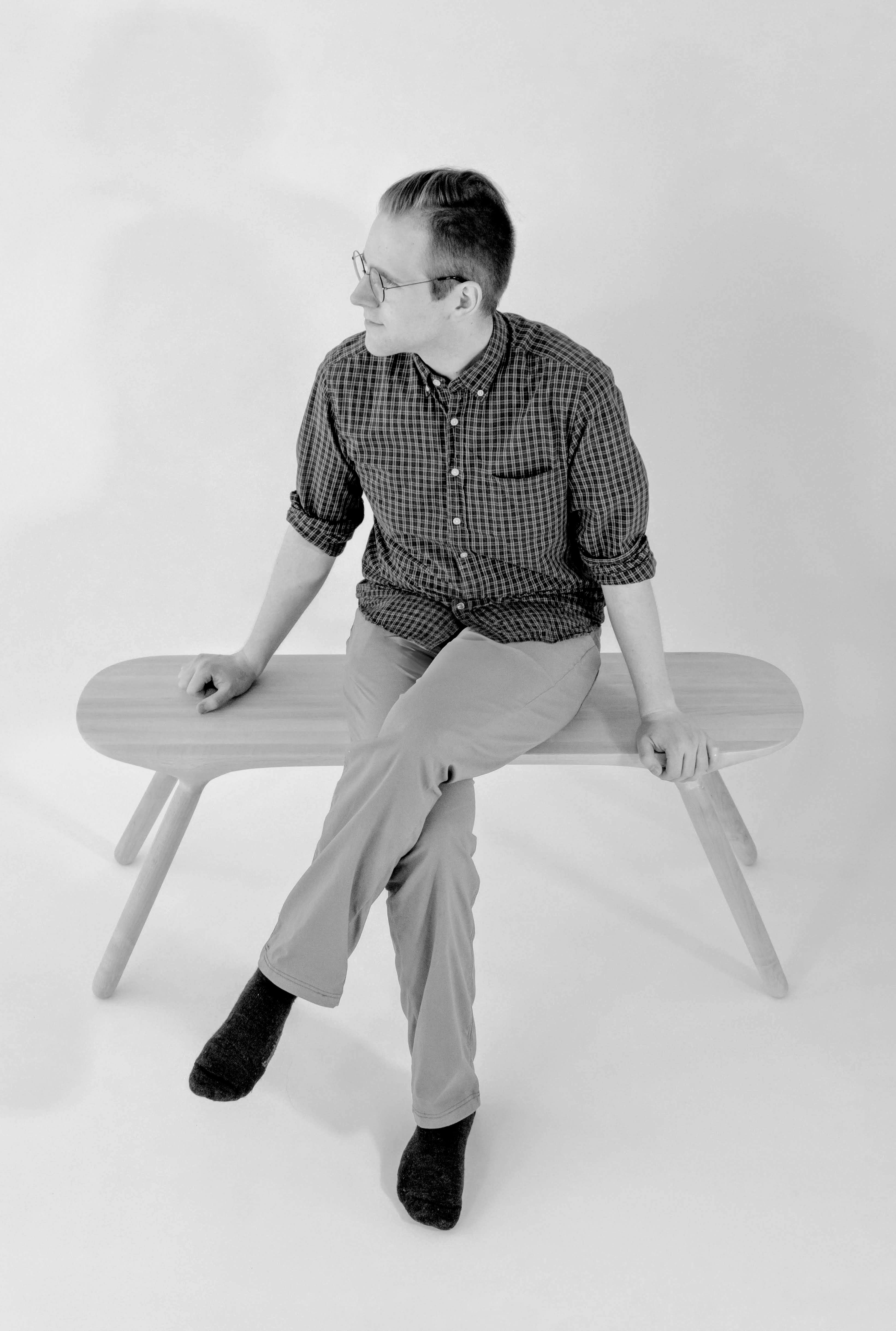
A solid maple bench with a CNC milled and hand-refined form. This piece was a key deliverable for the Archon Studio, a funded competition where students design a house and matching furniture that embodies a particular concept of dwelling. This bench was designed for my house entry, '12 Miles a Year'. The staked furniture technique was later revisited for the 'Staked Desk' project, though it was not affiliated with the studio.
Related Projects
Love Bench
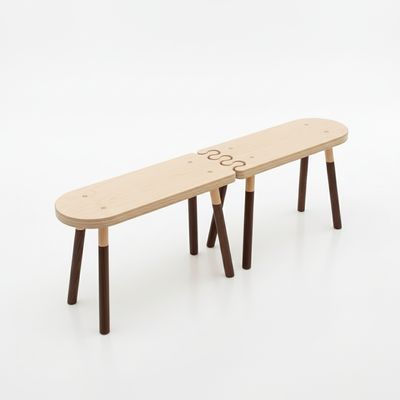
Revisiting a concept from the Archon Studio, the Love Bench was designed as playful, interlocking, multipurpose furniture. It solves three needs: a bench near the door for putting on shoes (with storage underneath), a sturdy weight-lifting bench that avoids the typically ugly aesthetic of exercise equipment, and extra guest seating when pulled apart into stools. The interlinked design provides 8 staked legs for support in its bench configuration, allowing it to take a significant load.
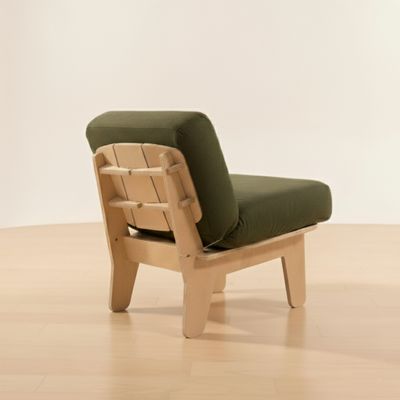
CNC Chair
A prototype chair based on the dimensions of an Eames LCW, fabricated from scrap plywood using a Shaper Origin handheld CNC. The design was modified to focus on joinery, angles, and tolerances suitable for CNC cutting and to accept a recycled foam cushion. An unproduced second pass on the design featured more rounded, friendly ergonomics; this iteration is visualized over photos of the original chair using my augmented reality app, Wikar. Justin McCallister is photographed sitting.
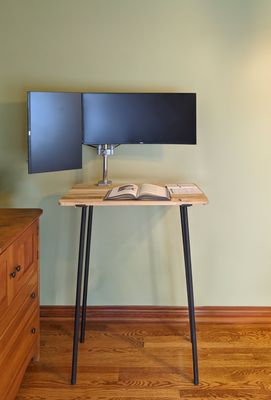
Staked Desk
A poplar standing desk built using the "baton" pattern from Christopher Schwarz's The Anarchist's Design Book. The project was an exercise in this craft philosophy, continuing my use of a simple and robust staked-leg joinery technique seen in two earlier projects. The result is a functional piece of workshop furniture built around a joint I keep coming back to.
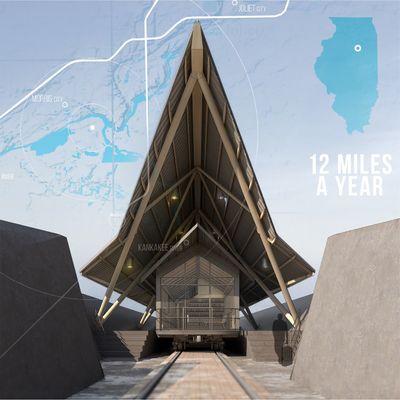
12 Miles a Year
Archon Studio Prize (2nd Place), 2018An architectural proposal that reclaims industrial infrastructure for habitation, this was my winning entry for the Archon Studio of 2018. Developed with the supervision of Olsen-Kundig Studio and professor Carl Lewis, the project drew inspiration from the post-industrial landscapes of the Midwest, particularly those of early nuclear research and energy production. Dresden Generating Station—the first privately financed nuclear power plant in the U.S. and a keystone of postwar energy optimism—sits within a landscape where rail lines, river corridors, and prairie converge. This terrain carries the histories of industry, energy, and abandonment. By re-inhabiting its disused rail lines, the project reclaims infrastructure not for transit or commerce but for reflection and habitation, transforming industrial remnants into a framework for living. Rather than treating movement as speed or efficiency, the project reframes locomotion as a slow inhabitation of landscape. Its propulsion system borrows from the mechanics of a grandfather clock, scaled up into a pendulum, counterweights, and a 1.5-meter winding wheel. Each day, residents wind the mechanism to power the ultra-slow drive, where a heavy steel "foot" presses against the ground to move the house forward. Built on the reclaimed steel frame of boxcars, the house unfolds as a linear sequence—private quarters, dining, power, and communal spaces—that extend dwelling into a year-long passage across prairie, rivers, marshland, and ruins. In place of the forward thrust of rail or the concentrated energy of nuclear power, the project proposes a cyclical, patient mode of inhabiting the landscape. The house becomes a way to read its environment slowly, reframing abandoned infrastructure as a stage for observation and ritual.