Design
I design things to support my work and others: exhibitions, architecture, furniture, hardware, and graphics. Making is a form of study—combining traditional techniques with new technologies to find low-cost, DIY methods that yield surprising qualities. I like artifacts that straddle boundaries: virtual/physical, analogue/digital, traditional/progressive.
About
I design things to support my work and others: exhibitions, architecture, furniture, hardware, and graphics. Making is a form of study—combining traditional techniques with new technologies to find low-cost, DIY methods that yield surprising qualities. I like artifacts that straddle boundaries: virtual/physical, analogue/digital, traditional/progressive.
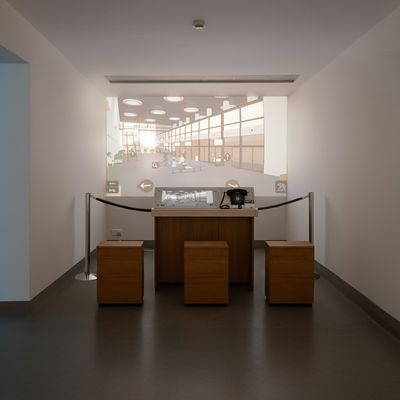
Nicosia International Airport VE
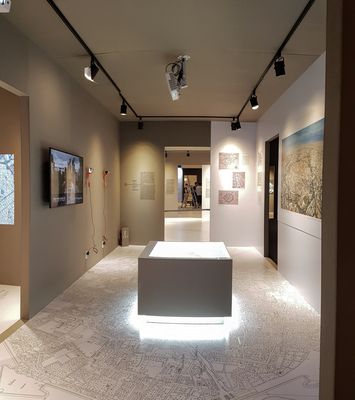
A museum installation featuring a reconstructed 3D model of Nicosia International Airport's modern terminal based on LiDAR scans and archival documentation, housed in a custom-designed wooden console with touchscreen navigation and immersive projection. I developed the participatory virtual environment to test dissertation methodologies on co-constructive virtual places for heritage, featuring a "propositional model" for directing public knowledge toward architectural features, and a period landline phone interface for oral story contribution. I also designed and developed the companion website at velab.cloud/nic/en. Deployed in a public exhibition at the Bank of Cyprus Cultural Foundation, the project captured over 3,200 play sessions and 300 oral story recordings, generating new qualitative data that expands and challenges the site's limited documentation. See the development timeline for in-progress screenshots and photos.
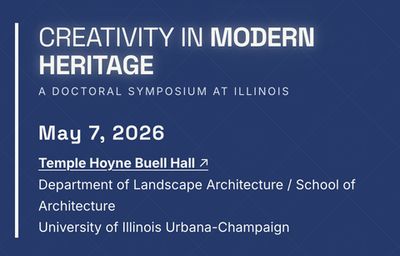
Creativity in Modern Heritage: A Doctoral Symposium
An interdisciplinary doctoral symposium on modern heritage that I co-chaired and designed the website for. Held on May 7, 2026 at Temple Hoyne Buell Hall, the event featured a keynote lecture by Hi'ilei Julia Hobart (Yale) and six papers, jointly supported by the PhD Programs in Architecture and Landscape Architecture and History + Theory + Preservation, with co-sponsors including the Unit for Criticism and Interpretive Theory, the Environmental Humanities Research Cluster, the American Indian Studies Program, and the Sawyer Seminars. I also presented my paper, 'Propositional Modeling for Digital Heritage: Committed Artifacts, Situated Knowledges,' at the symposium.
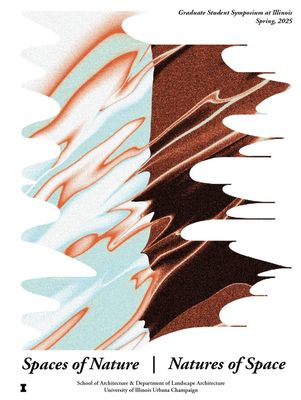
Spaces of Nature/Natures of Space Symposium
A graphic identity and website designed for the 'Spaces of Nature/Natures of Space' graduate student symposium. I created the event's visual identity and designed the official website while co-organizing the symposium with Taisuke Wakabayashi at the University of Illinois Urbana-Champaign. During the symposium, held on February 14, 2025, I presented an early draft of my research paper, 'The Interpretive Nature of Space: Generative Ambiguity in Heritage Visualization'. Abstract In architectural representation, the tension between objectivity and ambiguity opens space for interpretive engagement. Yet contemporary digital visualization practices increasingly prioritize photorealism—a pursuit that, as Lefebvre cautions, risks reducing lived space to a superficial spectacle. Drawing on research conducted at Cyprus's Virtual Environments Laboratory, this paper contends that the nature of space emerges not through visual mimesis but through the generative potential of representational ambiguity. Such an approach aligns virtual reconstructions with the deeper intellectual and cultural aims of the Digital Humanities. The Nicosia International Airport (1968), abandoned in Cyprus's UN buffer zone since 1974, exemplifies the interpretive challenges of modern architectural heritage. Here, meaning is negotiated between design intent, built form, and lived experience. More than a modernist relic of Cyprus's post-colonial aspirations, the site's abrupt abandonment transformed it into a time capsule of what de Certeau terms 'spatial practices': public terraces and amenities overlooking the tarmac once fostered forms of social life unimaginable in today's airports. With these practices now confined to living memory, methodologies are needed that integrate experiential knowledge with conventional documentation.To address this gap, we developed an approach to heritage visualization through a year-long museum installation featuring a virtual reconstruction of the airport set in 1969. By embedding carefully designed 'interpretation gaps'—strategic ambiguities in the visualization—we created a system that invites visitors to actively bridge these gaps through their contributions: memories, media, and historical knowledge. In this way, the virtual environment becomes both a research instrument and a medium for collective storytelling, supporting rather than supplanting the social practices that sustain collective memory.
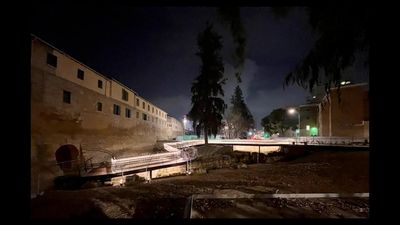
Paphos Gate: Nicosia
Multiple VR applications (using Oculus DK2 and HTC Vive) to visualize archaeological findings and a proposed architectural intervention for an urban archaeology project in Nicosia. I prototyped and built the applications as a research assistant, developing systems for locomotion, interaction, and gaze-tracking analytics to understand how stakeholders focused on the virtual site. These tools engaged everyone from the public to the Department of Antiquities. The gaze-tracking data directly informed the design of the final public walkway and was integrated into the permanent VR exhibit at the museum. The project spanned a decade before the site and its permanent VR exhibit opened to the public in 2024.
Quantum Itineraries Live Visuals
A suite of tools and visualizations in Unity for live-generated 3D visuals projected behind performers at 8K for dome or classical displays, using procedurally generated meshes and shaders. I built the system for the Quantum Itineraries music performances, a festival featuring quantum computer music where quantum simulations are core to composition and instrumentation. The quantum simulation data that generated the music also drove the visuals directly, with WebRTC routing Unity's output to a mixer for the projection.
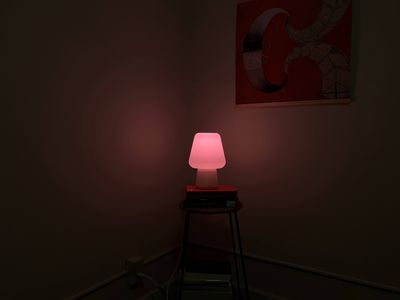
Lil Lamp
A small lamp designed with Taisuke Wakabayashi.
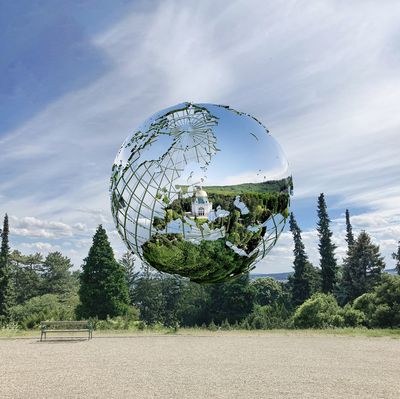
Otto Wagner Areal - Peter Kogler
An AR sculpture garden featuring Peter Kogler's unmade digital sculptures at Wiener Gesundheitsverbund, an Otto Wagner-designed early 20th century medical campus now reused as a university and culture campus. I served as technical producer, taking the artist's intricate 3D meshes, creating site-specific shaders to simulate reflection and lighting, and working on-site with Kogler to place, scale, and rotate the virtual works. I added features to Wikar for real-time metadata syncing from our Clowder server, enabling the rapid placement of eight complex sculptures in a single day. Part of a promotional event.
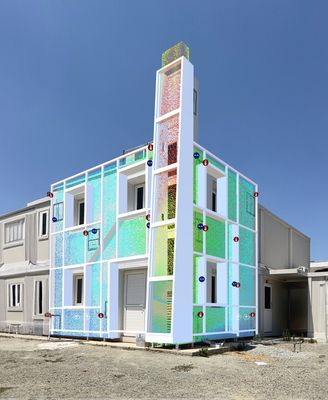
MESH AIRFLOW Visualization
An AR visualization of airflow patterns for a secondary facade system designed by the Cyprus Institute. I took the researchers' 2D computational fluid dynamics (CFD) simulations (heat and flow maps) and UV mapped them onto a 1:1 scale 3D model of the facade, then built a shader to animate these maps with particles, inspired by how Portal 2 visualizes fluid dynamics. In the final application, users scan a QR code on the test building and see the internal 'stack effect' in action, with callouts indicating sensor locations.
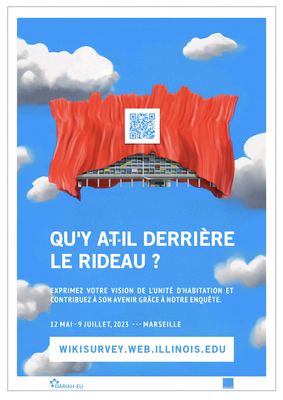
Unité d'Habitation Poster
A poster with basic information, a QR code, and URL using a simple visual element to imply mystery. We designed this to draw exhibition visitors to our wiki survey on public perceptions of Le Corbusier's Unité d'Habitation.
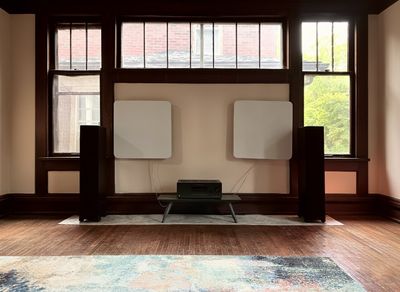
Lil Table
A small console table for an amplifier. 3D printed legs on a recycled cabinet door top.
BEEP Energy Sim
An AR energy-use visualization that lets stakeholders view expected energy loads for every room in a heritage building over the year using a phone or tablet. A slider scrubs through a full year of data, built to explain green infrastructure investments for the adaptive reuse project. More information on the project can be found here.Technical: I baked 3D room volumes into an optimized mesh whose vertex UVs encode positions on a packed lookup texture for GPU-driven animation without CPU overhead. The project also showcased Wikar's 3D section slicer, which recomposes standard shaders into slicable equivalents using 3D SDF intersections with a stencil pass for back-face fill.
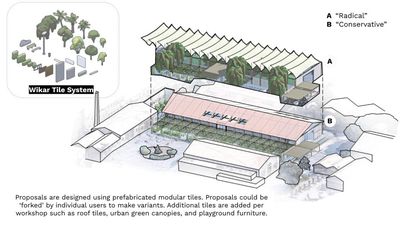
"Scan To Ar": Palermo
A co-design workshop using rapid 3D site capture and an AR design tool with a library of design primitives (akin to Lego bricks). The goal was to repurpose abandoned industrial heritage in Palermo. I collaborated with Federico La Russa to facilitate the workshop, using Wikar (my augmented reality platform) to swiftly mock up and review architectural proposals with stakeholders over a single weekend. The co-design process helped the local campus community collect a public voice for preserving the open space, and the site opened as a public space in October 2022. Conference presentation and publication documented the methodology.
Eva Schlegel
Public AR installations for artist Eva Schlegel's studio, featuring complex custom shaders developed by her team. My role was to provide the technical education and platform support to make this possible. I extended the Wikar platform with new capabilities specifically for this project, including support for stencil shaders, UI compositing, and safeguarding access to camera textures and other rendering features that Unity would typically strip from a build.
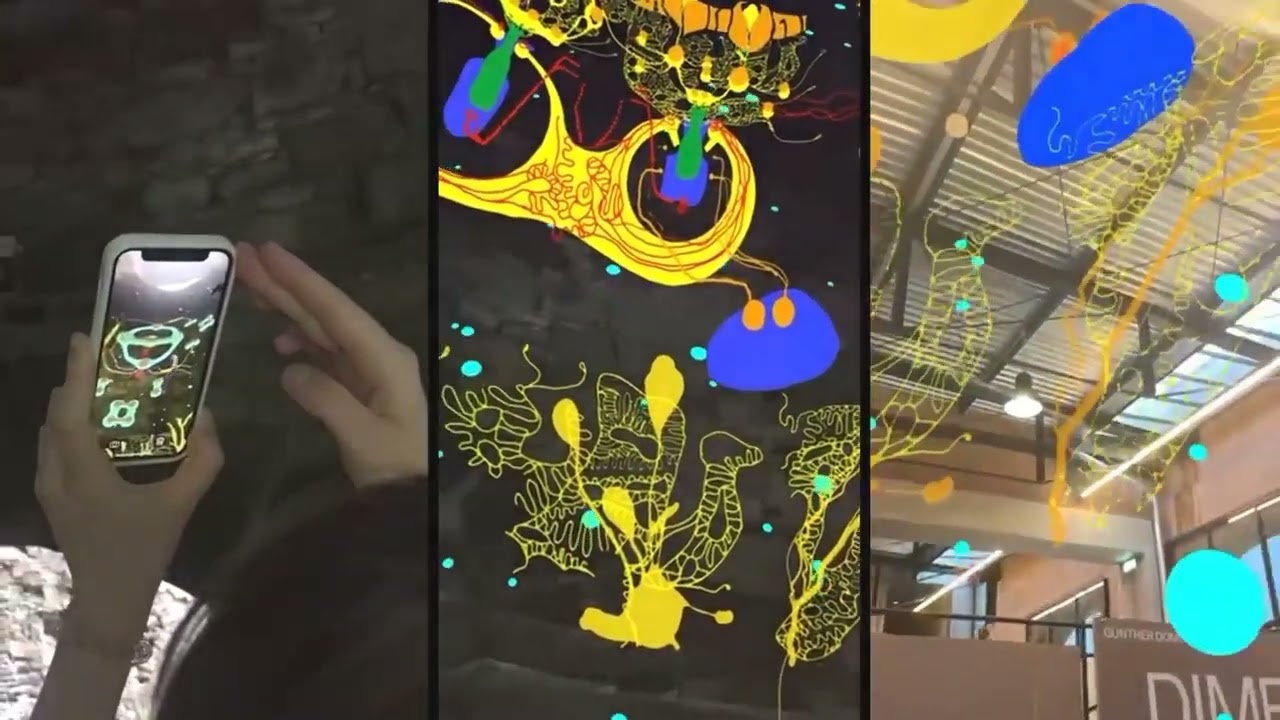
Other Matter
An AR exhibition with Valerie Messini and her students at the University of Applied Arts in Vienna. To support the students' creation of interactive and reactive sculptures, I extended the Wikar platform with several new features. This included more robust QR code scanning (improving reliability for inverted codes), expanded UI customization options, and a set of "interaction primitives" that students could use for proximity-based events or custom user controls. A video of the exhibition can be seen here.
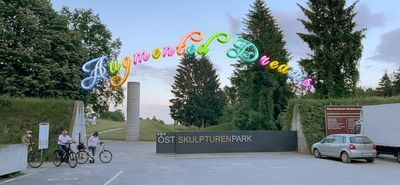
Augmented Dreams: AR Sculpture Park
An AR sculpture park for a public exhibition in Graz, Austria, layering digital works by MFA students onto an existing physical sculpture park. As the selected technical producer, I provided Wikar for its openness and spatial accuracy. The students created site-specific works, some of which extended existing physical sculptures in interesting ways. To meet the high demand for documentation from both students and visitors, I improved Wikar's performance and added new photo and video recording capabilities to the app.
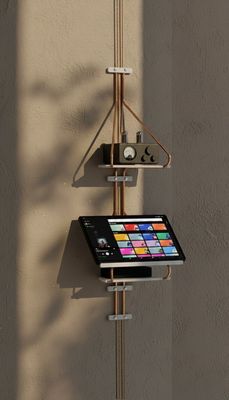
Hifi System
An all-in-one wall mounted hifi system optimized for a digital collection, using a pipe-bending jig and brass dowels to make a simple but striking shape. Images of the design can be seen here.
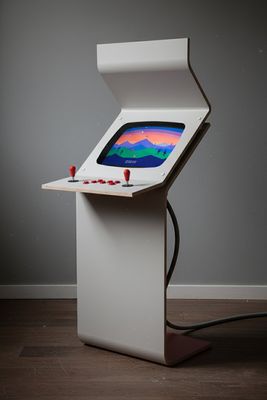
Arcade Cabinet
An arcade cabinet designed for exhibiting contemporary art games. The key detail is a fabrication method I developed for creating a perfect, CRT-style curved lens to place over a modern flat-panel screen. The technique adapts the principles of liquid-mirror telescopes: first, liquid silicone is spun in a dish to form a perfect parabolic mold; then, epoxy is poured into the stationary mold to cast the lens. While this fabrication method is developed and ready, the project is currently shelved, awaiting grant funding to produce a full-scale prototype.
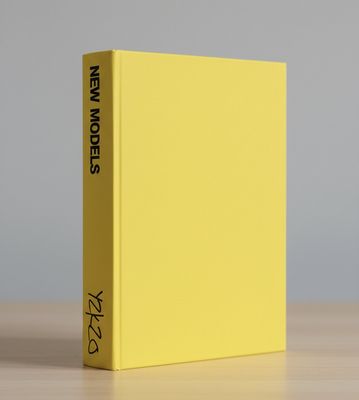
New Models Codex Y2K20
An article titled '#The-New-Aesthetic: Objects in Mirror are Much Closer than They Appear', reading James Bridle's term of the technological uncanny into the strange photography of lockdowns and security in 2020. I contributed this piece to a retrospective on 2020, the year we were trapped inside.
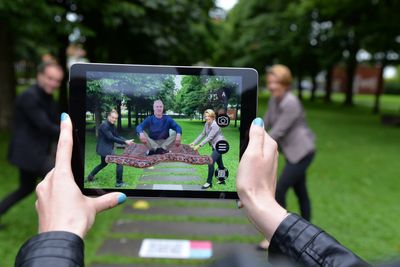
Erwin Wurm
An AR deployment of Erwin Wurm's sculptural works in new contexts using augmented reality. I worked with Studio Calas in an educational and technical capacity, training their team on how to prepare and optimize 3D models for the Wikar platform and its upload pipeline while they handled photogrammetry and content creation. At their request, I also made Wikar's QR code scanning more robust for outdoor environments and for use with different colored tags.
CryoLumens
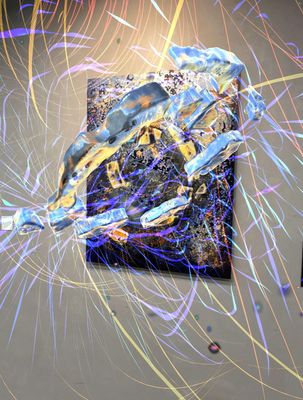
An AR artwork representing the strength and location of Earth's magnetic fields using NASA's real-time sensor network, overlaying data-driven particle systems on an original painting using image tracking. When viewed through a phone, the painting comes alive with particles that shift and flow based on live magnetic field data. I developed the coding and visuals for Eli Joteva.Technical: Live sensor intensities are baked into packed textures so particles animate by interpolating a texture index on the GPU, keeping the visualization real-time without CPU overhead.
Miner 75
A SCI-ARC thesis film with concept work, matte paintings, and VFX pre-visualization. I assisted Christian Pepper with production.
Earth Vis
An experiment in converting NASA climate data into a real-time VFX graph visualization. For this project, I built a system in Unity where a compute shader drives particles across a globe in polar coordinates, sampling precomputed flowmaps for wind speed and direction, while their trails change color based on temperature.
Staked Desk
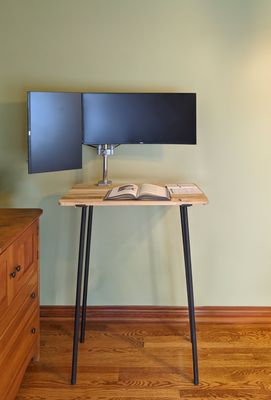
A poplar standing desk built using the "baton" pattern from Christopher Schwarz's The Anarchist's Design Book. The project was an exercise in this craft philosophy, continuing my use of a simple and robust staked-leg joinery technique seen in two earlier projects. The result is a functional piece of workshop furniture built around a joint I keep coming back to.
Strange Pipe
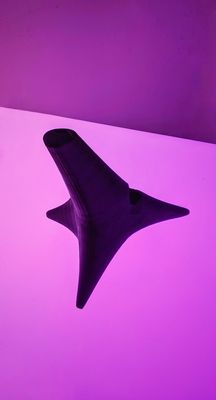
A strange waterpipe designed by Stephen Ferroni, fabricated with my assistance.
Guccibytes
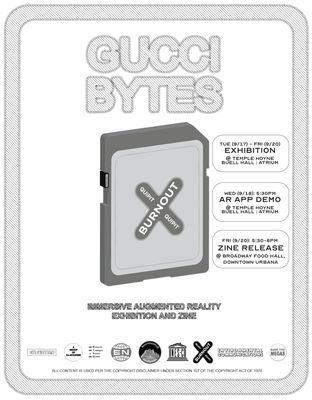
An exhibition and print zine showcasing unfinished speculative pieces from our studio organization, Quipit, with a focus on revealing the often-unseen digital components of our work. The zine was printed on long scrolls wrapped around PVC lattices, with embedded QR codes linking to AR content in Wikar. Each contributor used the platform differently: some created virtual galleries, others showed complex models on virtual plinths, and I created a "3D portal" to show one of my miniature models staged in its fictional setting. The physical exhibition components were built from materials recycled from a previous project.
Timeline Atlas
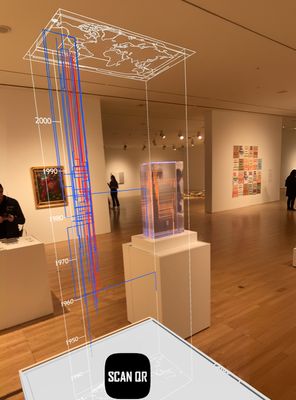
Two AR data-visualization sculptures visualizing datasets too complex to depict through physical sculpture: the home locations of all female senators over the past century. I collaborated with artist Stephen Cartwright, known for meticulously logging personal data over decades and crafting it into acrylic sculptures that exhibit spatial-temporal patterns. We used AR to go beyond his traditional manufacturing techniques. Debuted as part of a faculty showcase in 2019.
Tales From The Incoherence Era
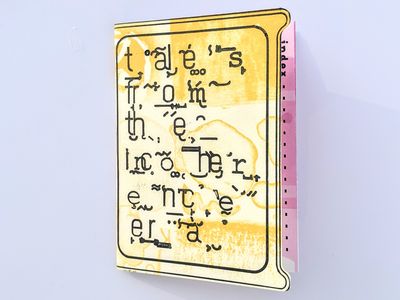
A small zine of collected writings and graphics. As the primary creator and editor, I contributed most of the content and handled the final assembly, including a custom embossed cover on recycled paperstock.
Recovering Urban Memory: Beijing
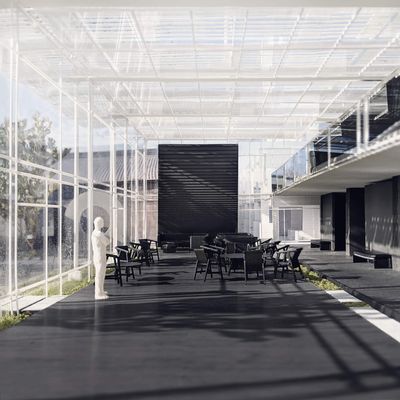
Chicago Studio Award (First Place), 2019An architectural intervention to redesign an abandoned farmer's market in the historic heart of Beijing's Baitasi District, resurrecting collective spaces such as farmers' markets and cafes that had slowly disappeared from the community fabric. I developed this proposal through the UIUC Plym Studio, exploring lost cultural practices and spaces in the district from the turn of the century through to the late modern period. The studio was led in collaboration with Dong Gong of Vector Architects and Professor Botond Bognar. See an interview about this project with Mayur Mistry.

A3 Award Logo
A logo generated using a reaction-diffusion physics simulation in Grasshopper, configured to store the entire time-series of the simulation. By extruding this data with the Z-axis representing time, the final form visualizes the 'A3' letters growing to fill the constraints of the badge shape, creating an intricate pattern where the content is determined by the constraints of its graphic container. My entry to the A3 (Annual Architecture Awards) logo competition.
CNC Chair
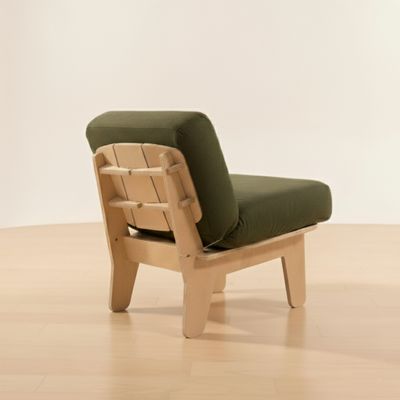
A prototype chair based on the dimensions of an Eames LCW, fabricated from scrap plywood using a Shaper Origin handheld CNC. The design was modified to focus on joinery, angles, and tolerances suitable for CNC cutting and to accept a recycled foam cushion. An unproduced second pass on the design featured more rounded, friendly ergonomics; this iteration is visualized over photos of the original chair using my augmented reality app, Wikar. Justin McCallister is photographed sitting.
Love Bench
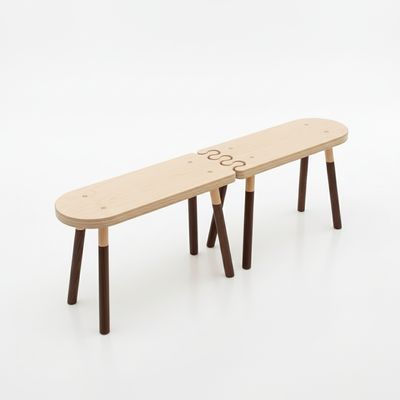
Revisiting a concept from the Archon Studio, the Love Bench was designed as playful, interlocking, multipurpose furniture. It solves three needs: a bench near the door for putting on shoes (with storage underneath), a sturdy weight-lifting bench that avoids the typically ugly aesthetic of exercise equipment, and extra guest seating when pulled apart into stools. The interlinked design provides 8 staked legs for support in its bench configuration, allowing it to take a significant load.
Illusive
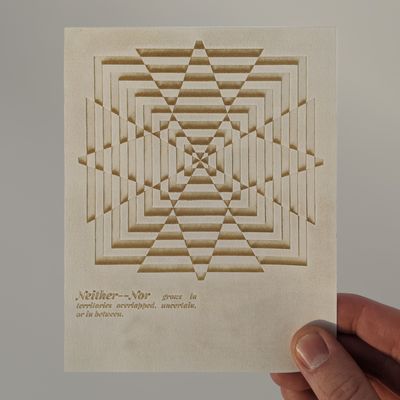
A limited-edition series of block prints and embossed graphics displaying optical illusions and intense patterns. I created this series myself, developing an experimental pipeline that used 3D-printed embossing plates to achieve deep, tactile imprints on the cards.
Will Arnold
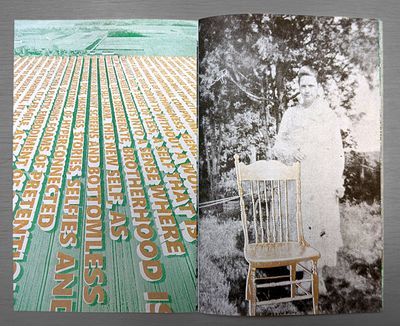
A collaborative two-color risograph zine produced during a seminar with professor David Lyle Hays. As a participating student, I produced the masked image on the left (David Hays, right). The text in my image was contributed by architecture PhD student Soumya Dasgupta. The zine was printed by Will Arnold, a lead print technician at UIUC and prolific zine maker.
The Austere
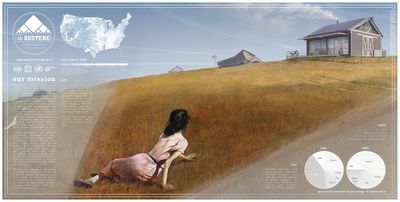
CRITICAL MASS Student Choice Award, 2018A speculative project that imagines a near-future of climate catastrophe where corporations provide prefabricated housing tied to labor contracts. Originally a design-build proposal for the U.S. Solar Decathlon, I reformulated the work to explore how speculative design could feel more imminent and unsettling. Instead of distant hyperbole, the project grounded its extreme scenario in plausible economic and social trends, positioning it between architectural proposal, narrative fiction, and propaganda artifact. Exhibited as a large-format presentation board and later as an augmented reality installation, the work won the Student Choice Award at Critical Mass in 2018.
Digital Picnic
A suspended holo-deck-like structure using projectors and a USB controller to adjust the environment with various images, patterns, and colors. I contributed production, assembly, conceptualization, and created visuals and an interactive controller using Arduino and Max/MSP, working with Christian Pepper and Robert Prochaska. We ultimately repurposed the installation into permanent furniture.
Bezeliness Intensifies
A series of light sculptures and pen-plotted transparent graphics exploring the aesthetics of frames and bezels through space-filling curves, packing algorithms, and reaction-diffusion simulations. The work blended 3D printing, pen plotting, reactive lighting, and other digital production techniques. It was installed in three locations: the UIUC School of Architecture, the Broadway Food Hall, and a six-month window display on Urbana's main street.
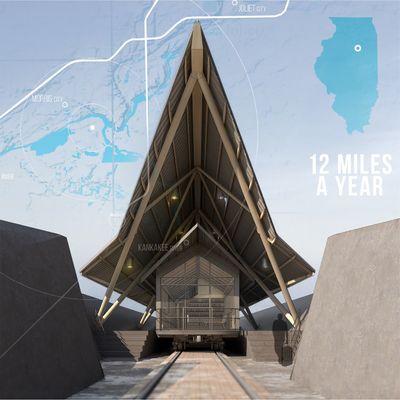
12 Miles a Year
Archon Studio Prize (2nd Place), 2018An architectural proposal that reclaims industrial infrastructure for habitation, this was my winning entry for the Archon Studio of 2018. Developed with the supervision of Olsen-Kundig Studio and professor Carl Lewis, the project drew inspiration from the post-industrial landscapes of the Midwest, particularly those of early nuclear research and energy production. Dresden Generating Station—the first privately financed nuclear power plant in the U.S. and a keystone of postwar energy optimism—sits within a landscape where rail lines, river corridors, and prairie converge. This terrain carries the histories of industry, energy, and abandonment. By re-inhabiting its disused rail lines, the project reclaims infrastructure not for transit or commerce but for reflection and habitation, transforming industrial remnants into a framework for living. Rather than treating movement as speed or efficiency, the project reframes locomotion as a slow inhabitation of landscape. Its propulsion system borrows from the mechanics of a grandfather clock, scaled up into a pendulum, counterweights, and a 1.5-meter winding wheel. Each day, residents wind the mechanism to power the ultra-slow drive, where a heavy steel "foot" presses against the ground to move the house forward. Built on the reclaimed steel frame of boxcars, the house unfolds as a linear sequence—private quarters, dining, power, and communal spaces—that extend dwelling into a year-long passage across prairie, rivers, marshland, and ruins. In place of the forward thrust of rail or the concentrated energy of nuclear power, the project proposes a cyclical, patient mode of inhabiting the landscape. The house becomes a way to read its environment slowly, reframing abandoned infrastructure as a stage for observation and ritual.
Archon, The Essential Dwelling
A documentary book showcasing the work of all participating students in the Archon Studio. I was responsible for producing the book.
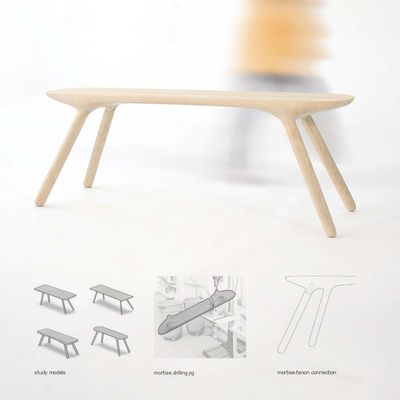
Staked Bench
A solid maple bench with a CNC milled and hand-refined form. This piece was a key deliverable for the Archon Studio, a funded competition where students design a house and matching furniture that embodies a particular concept of dwelling. This bench was designed for my house entry, '12 Miles a Year'. The staked furniture technique was later revisited for the 'Staked Desk' project, though it was not affiliated with the studio.
Cyprus Pavilion: Seoul Biennale
A lightweight VR installation featuring a 3D-printed, stereogram-inspired VR system that loops 360-degree stereo videos of climate modeling scenarios and disasters unfolding within a virtual model of Nicosia. I designed the system while assisting the VELab at the Cyprus Institute for the Cyprus Pavilion at the Seoul Biennale.
Quipit Student Survey
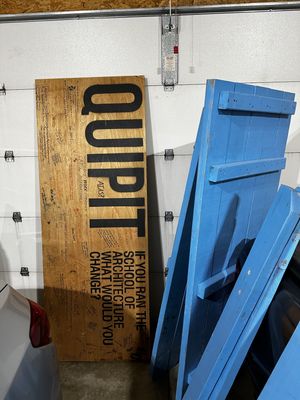
A participatory table installation in the school's atrium that challenged passersby with the question: What would you change if you ran the school? Over a month, the table filled with students' handwritten responses. QUIPIT—a student group in the University of Illinois' School of Architecture, with Ray Majewski, Christian Pepper, and Robert Prochaska—then held a student event to discuss the responses and presented findings to the school's director. Part of our ongoing use of tongue-in-cheek installation art to open conversation among students, faculty, and administration.
Nightmare House 2
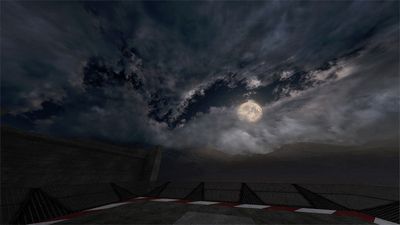
A skybox for a free horror indie game that replaces the outside environment, working at ground level and when on top of a tall tower. I created the skybox using a combination of Vue rendering and photocollage with a program called Skypaint which manages perspective-correction when editing.
Source Engine Skyboxes
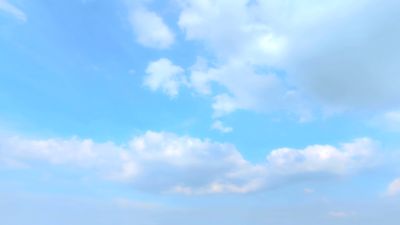
Skyboxes for the Source engine built using Terragen, Vue, and photocollage, along with 360 panoramic images from my own camera. I created these for personal projects, friend's projects, and mods during my earliest experiences with Photoshop and art making from ~2008-2010. A friend bundled the materials I had distributed into one package.