Cyprus Pavilion: Seoul Biennale
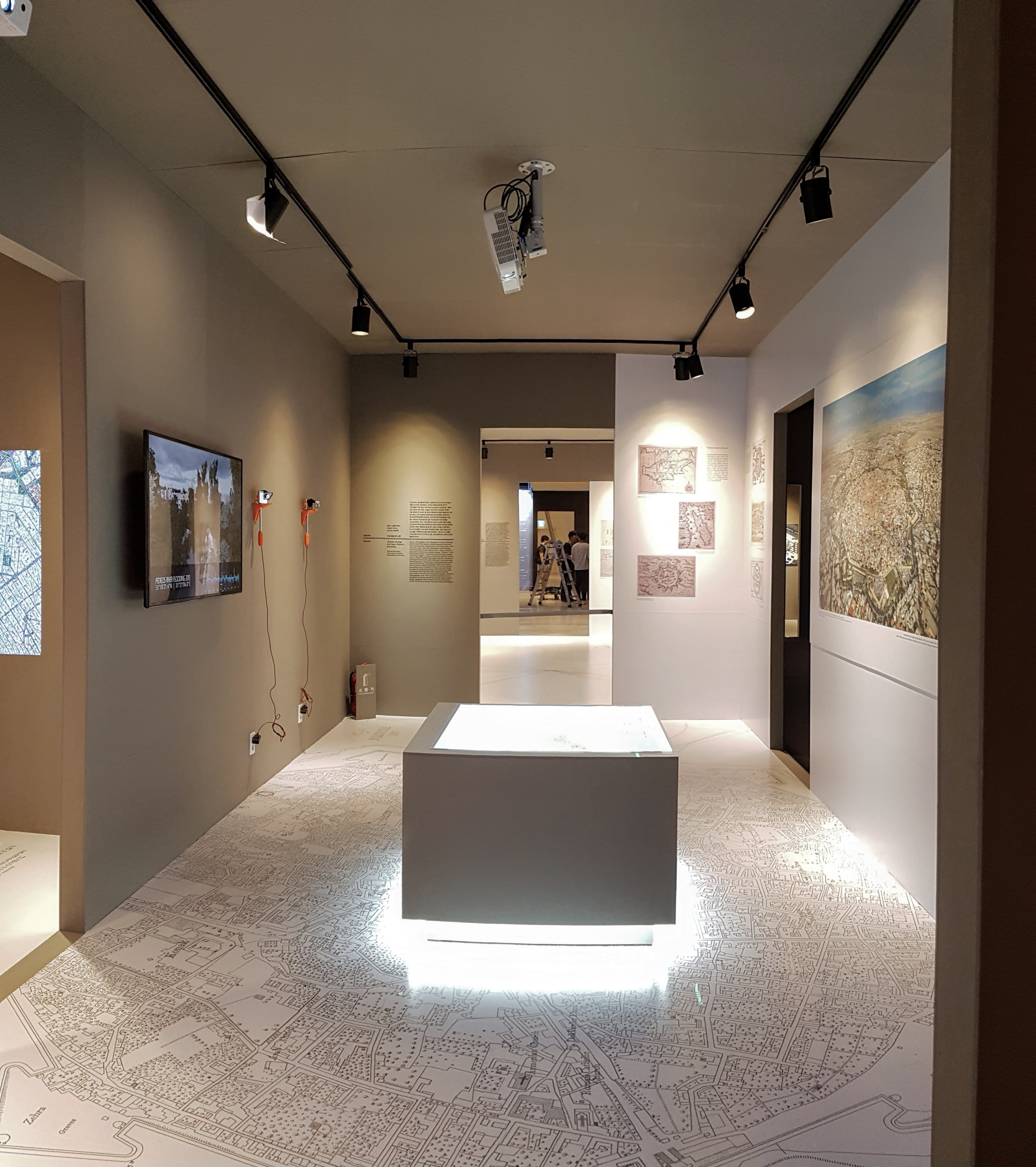
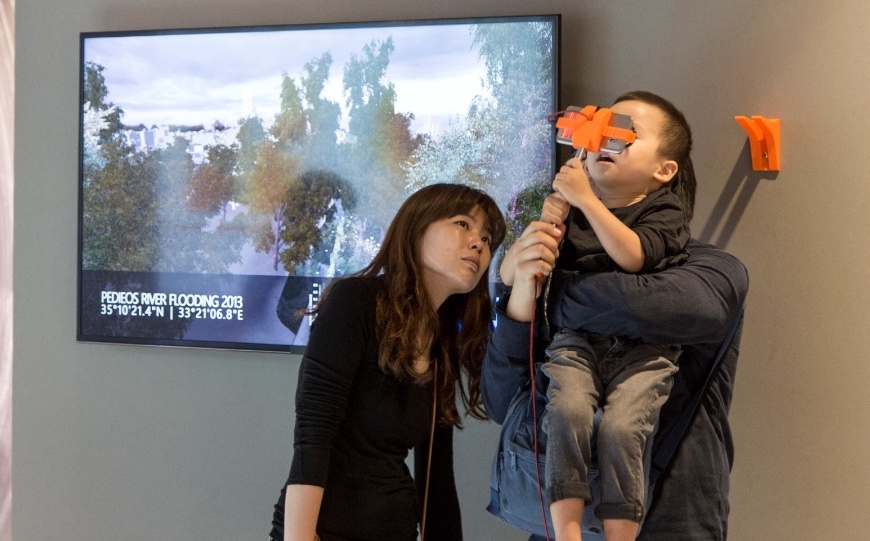
A lightweight VR installation featuring a 3D-printed, stereogram-inspired VR system that loops 360-degree stereo videos of climate modeling scenarios and disasters unfolding within a virtual model of Nicosia. I designed the system while assisting the VELab at the Cyprus Institute for the Cyprus Pavilion at the Seoul Biennale ↗.
Related Projects
Bezeliness Intensifies
A series of light sculptures and pen-plotted transparent graphics exploring the aesthetics of frames and bezels through space-filling curves, packing algorithms, and reaction-diffusion simulations. The work blended 3D printing, pen plotting, reactive lighting, and other digital production techniques. It was installed in three locations: the UIUC School of Architecture, the Broadway Food Hall, and a six-month window display on Urbana's main street.
Strange Pipe
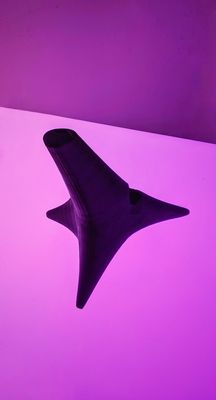
A strange waterpipe designed by Stephen Ferroni, fabricated with my assistance.
Digital Picnic
A suspended holo-deck-like structure using projectors and a USB controller to adjust the environment with various images, patterns, and colors. I contributed production, assembly, conceptualization, and created visuals and an interactive controller using Arduino and Max/MSP, working with Christian Pepper and Robert Prochaska. We ultimately repurposed the installation into permanent furniture.
Paphos Gate: Nicosia
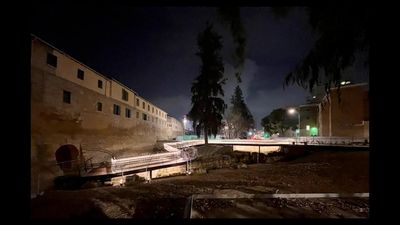
Multiple VR applications (using Oculus DK2 and HTC Vive) to visualize archaeological findings and a proposed architectural intervention for an urban archaeology project in Nicosia. I prototyped and built the applications as a research assistant, developing systems for locomotion, interaction, and gaze-tracking analytics to understand how stakeholders focused on the virtual site. These tools engaged everyone from the public to the Department of Antiquities. The gaze-tracking data directly informed the design of the final public walkway and was integrated into the permanent VR exhibit at the museum. The project spanned a decade before the site and its permanent VR exhibit opened to the public in 2024.