Nicosia International Airport VE
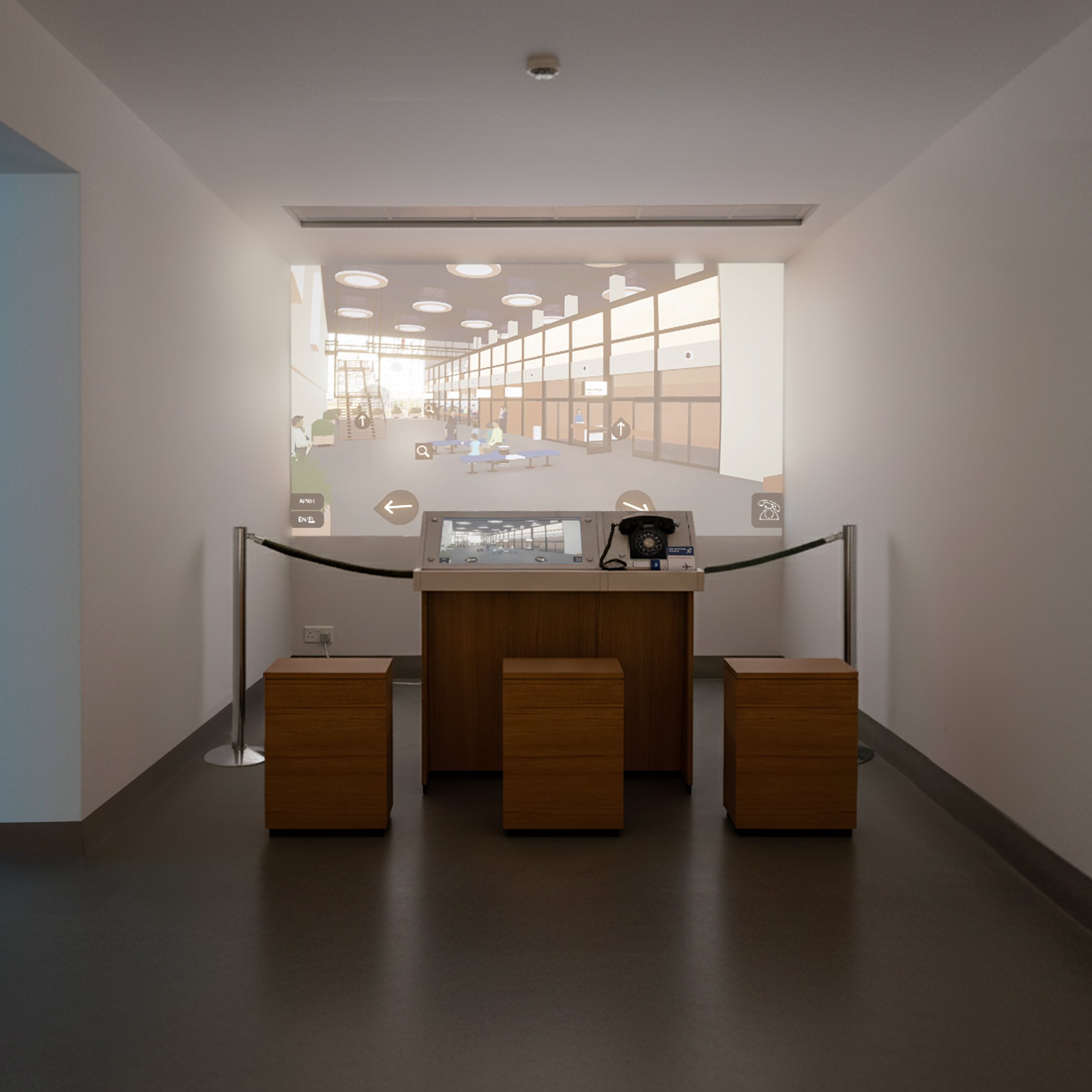
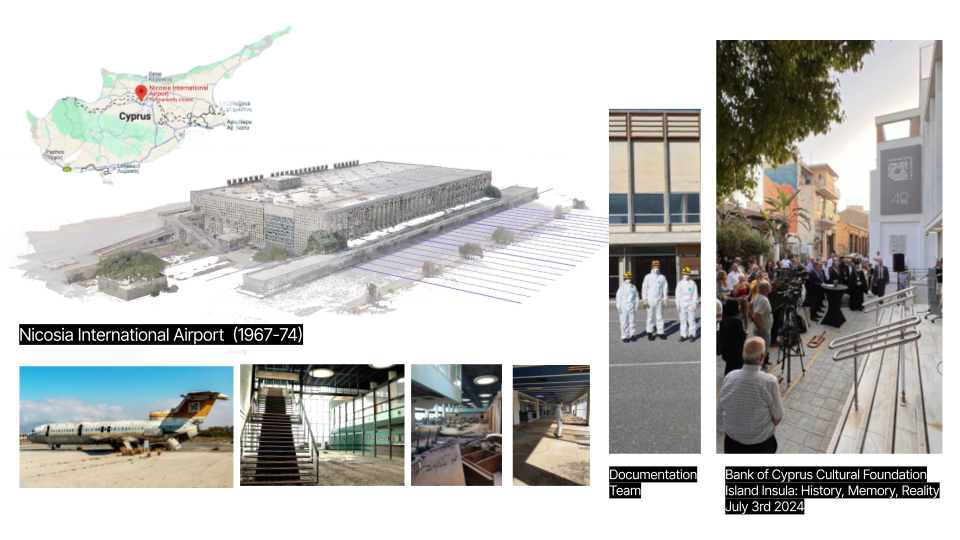
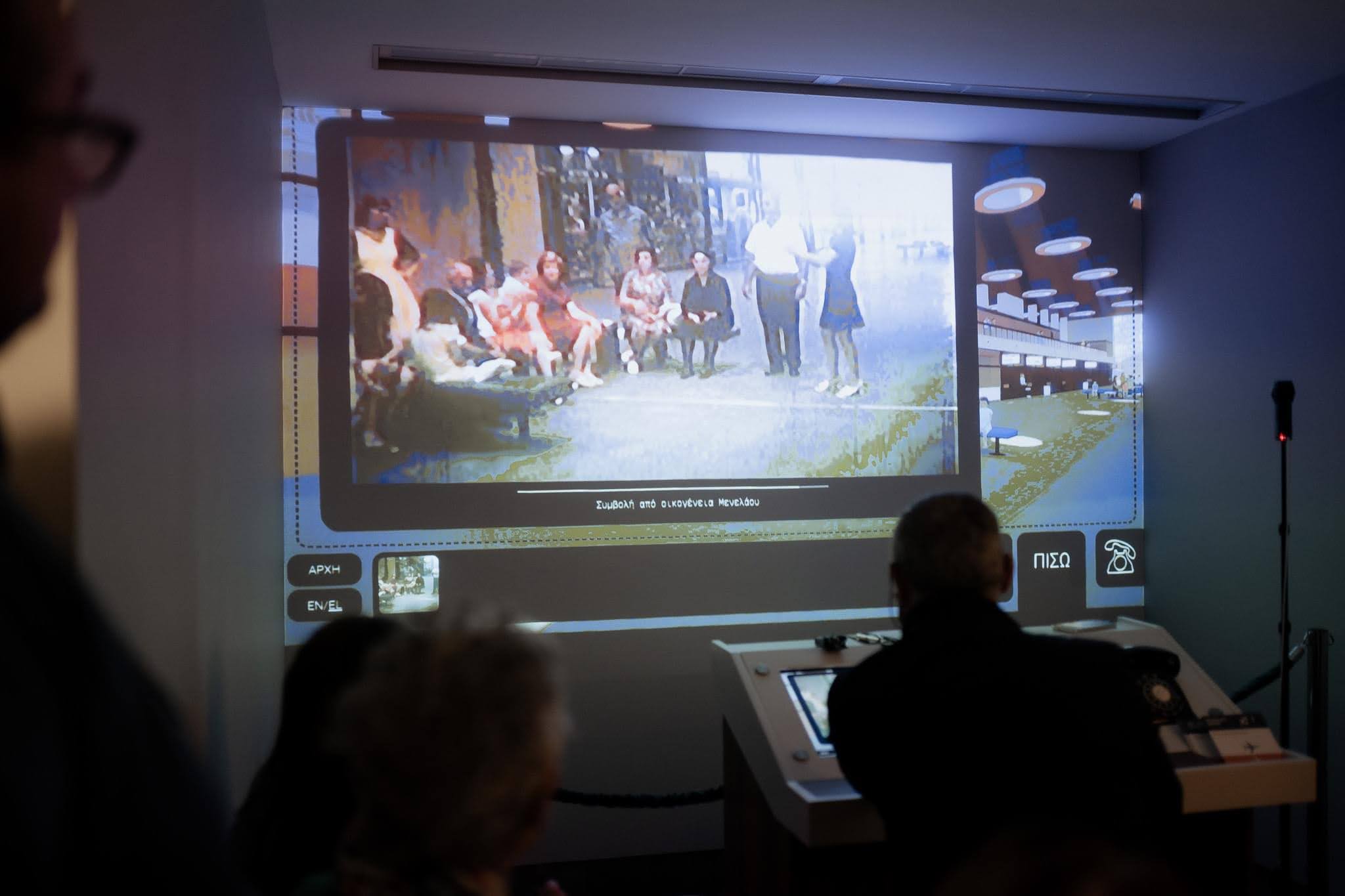
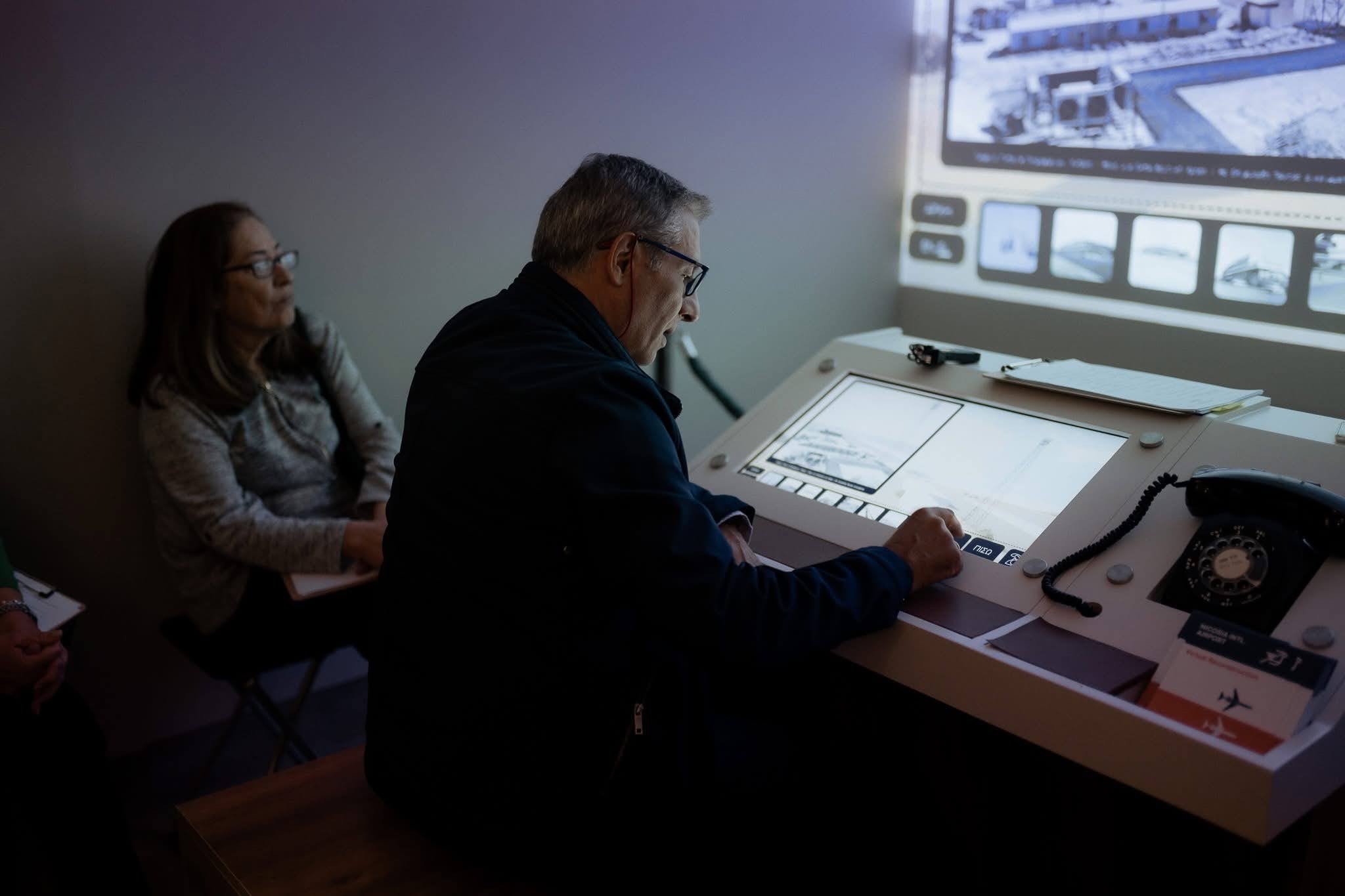
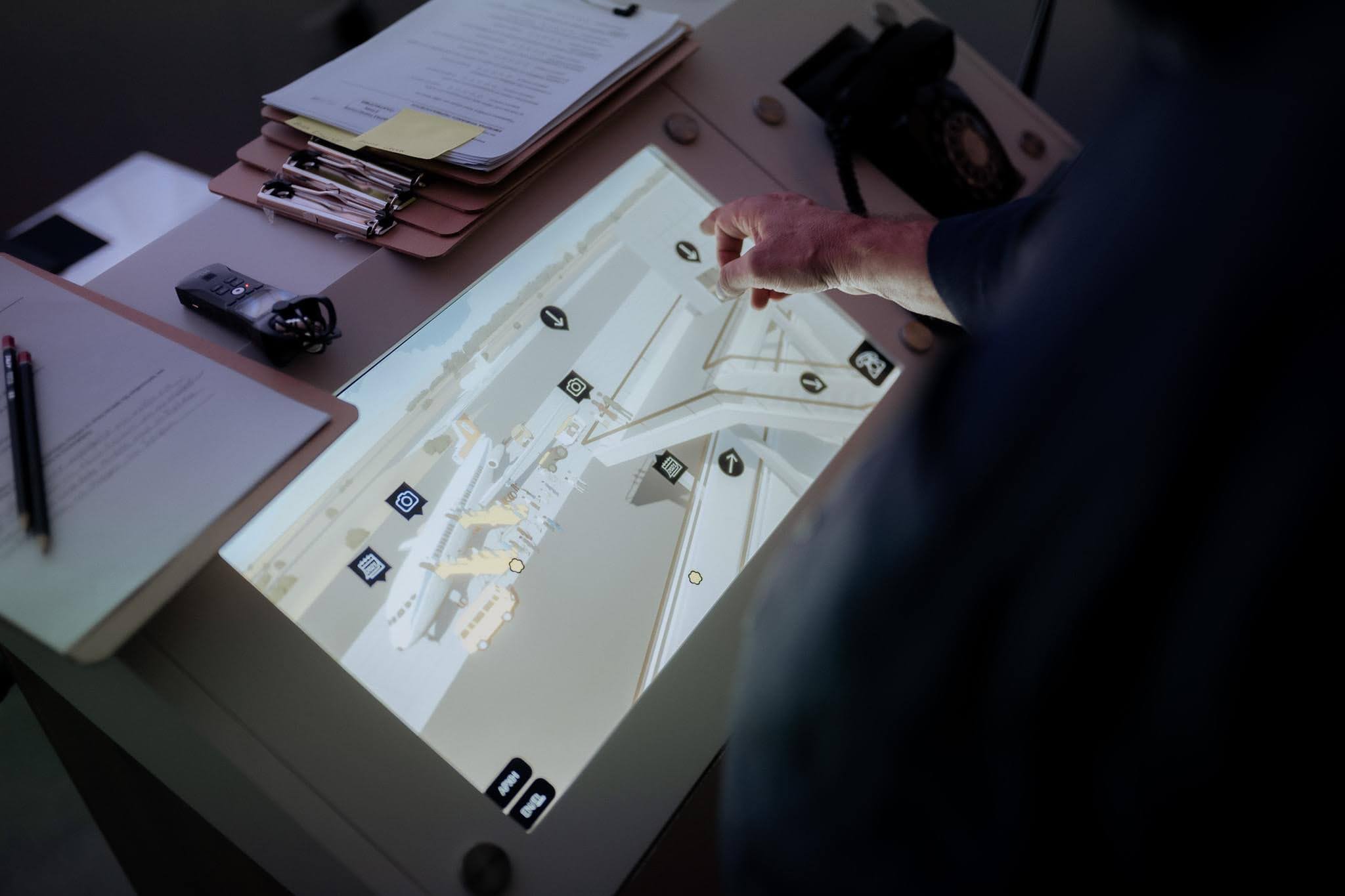
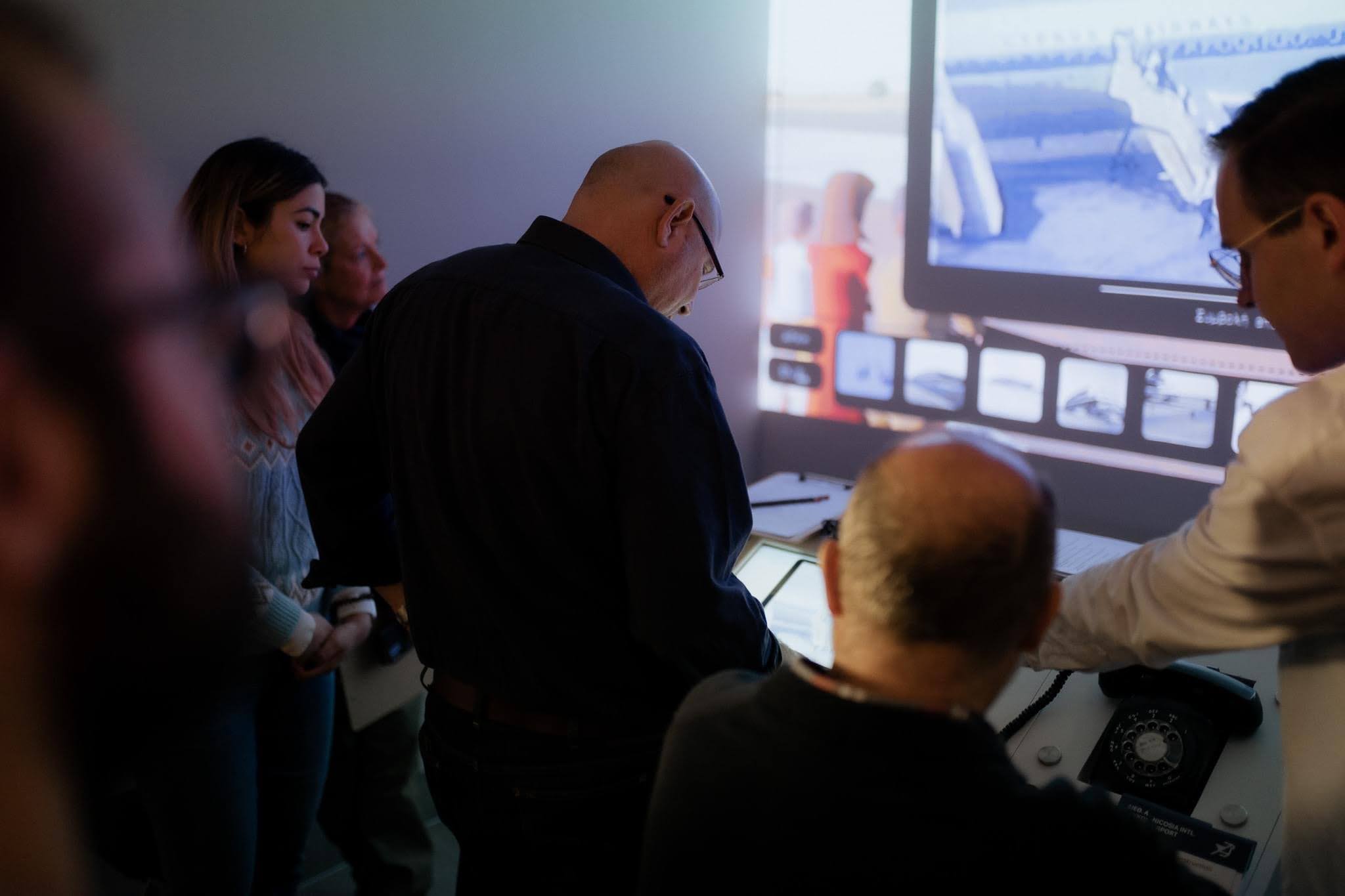
A museum installation featuring a reconstructed 3D model of Nicosia International Airport's modern terminal based on LiDAR scans and archival documentation, housed in a custom-designed wooden console with touchscreen navigation and immersive projection. I developed the participatory virtual environment to test dissertation methodologies on co-constructive virtual places for heritage, featuring a "propositional model" for directing public knowledge toward architectural features, and a period landline phone interface for oral story contribution. I also designed and developed the companion website at velab.cloud/nic/en ↗. Deployed in a public exhibition at the Bank of Cyprus Cultural Foundation, the project captured over 3,200 play sessions and 300 oral story recordings, generating new qualitative data that expands and challenges the site's limited documentation. See the development timeline ↗ for in-progress screenshots and photos.
Related Projects
Paphos Gate: Nicosia
Multiple VR applications (using Oculus DK2 and HTC Vive) to visualize archaeological findings and a proposed architectural intervention for an urban archaeology project in Nicosia. I prototyped and built the applications as a research assistant, developing systems for locomotion, interaction, and gaze-tracking analytics to understand how stakeholders focused on the virtual site. These tools engaged everyone from the public to the Department of Antiquities. The gaze-tracking data directly informed the design of the final public walkway and was integrated into the permanent VR exhibit at the museum. The project spanned a decade before the site and its permanent VR exhibit opened to the public in 2024.
Constraints, Not Freedom: Designing Virtual Environments for Distributed Co-Creation
A poster and live-demo presentation at the IMMERSE Symposium 2026 (April 28-29, University of Illinois Urbana-Champaign), introducing five productive constraint patterns - spatial, propositional, relational, technical, thematic - as a typology for designing user-generated-content systems. Drawing on a decade of design-research across Nicosia International Airport VE, C.H.A.I.N. 3, Soap Soup, the Haunted PS1 demo discs, and Wikar, the work argues that maximizing user freedom can paradoxically undermine the creative economy in which participants engage. The booth presented two live demos: Soap Soup (technical constraint) on a CRT and the Nicosia Airport VE (propositional constraint) on a laptop. Supplement page hosts the full abstract, partner credits, analogous-pattern links, and project context.
Generative Ambiguity in Heritage Visualisation
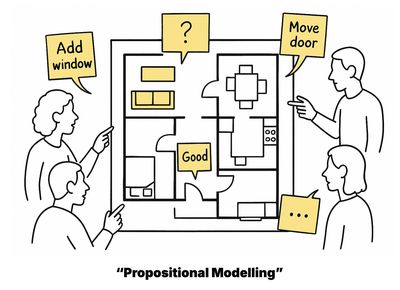
A conference presentation arguing that moving beyond photorealism to embrace representational abstraction and ambiguity can create more participatory works in digital cultural heritage. I presented this research, a core component of my dual PhD dissertation work, at the DARIAH Annual Event 2025 in Goettingen, Germany as part of the Digital Storytelling session. The full presentation materials, including slides and abstract, are archived on Zenodo.
BEEP Energy Sim
An AR energy-use visualization that lets stakeholders view expected energy loads for every room in a heritage building over the year using a phone or tablet. A slider scrubs through a full year of data, built to explain green infrastructure investments for the adaptive reuse project. More information on the project can be found here.Technical: I baked 3D room volumes into an optimized mesh whose vertex UVs encode positions on a packed lookup texture for GPU-driven animation without CPU overhead. The project also showcased Wikar's 3D section slicer, which recomposes standard shaders into slicable equivalents using 3D SDF intersections with a stencil pass for back-face fill.