Generative Ambiguity in Heritage Visualisation
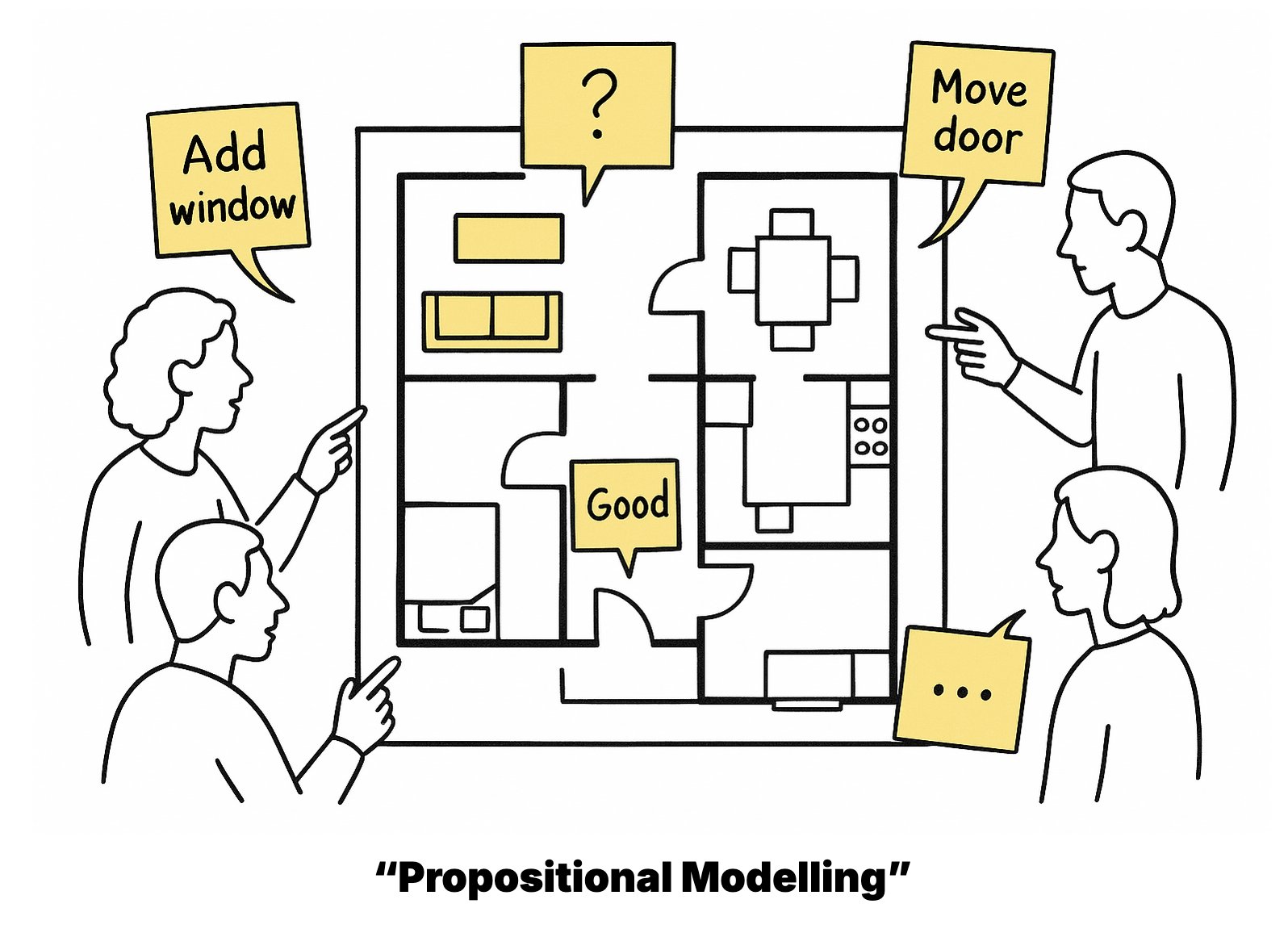
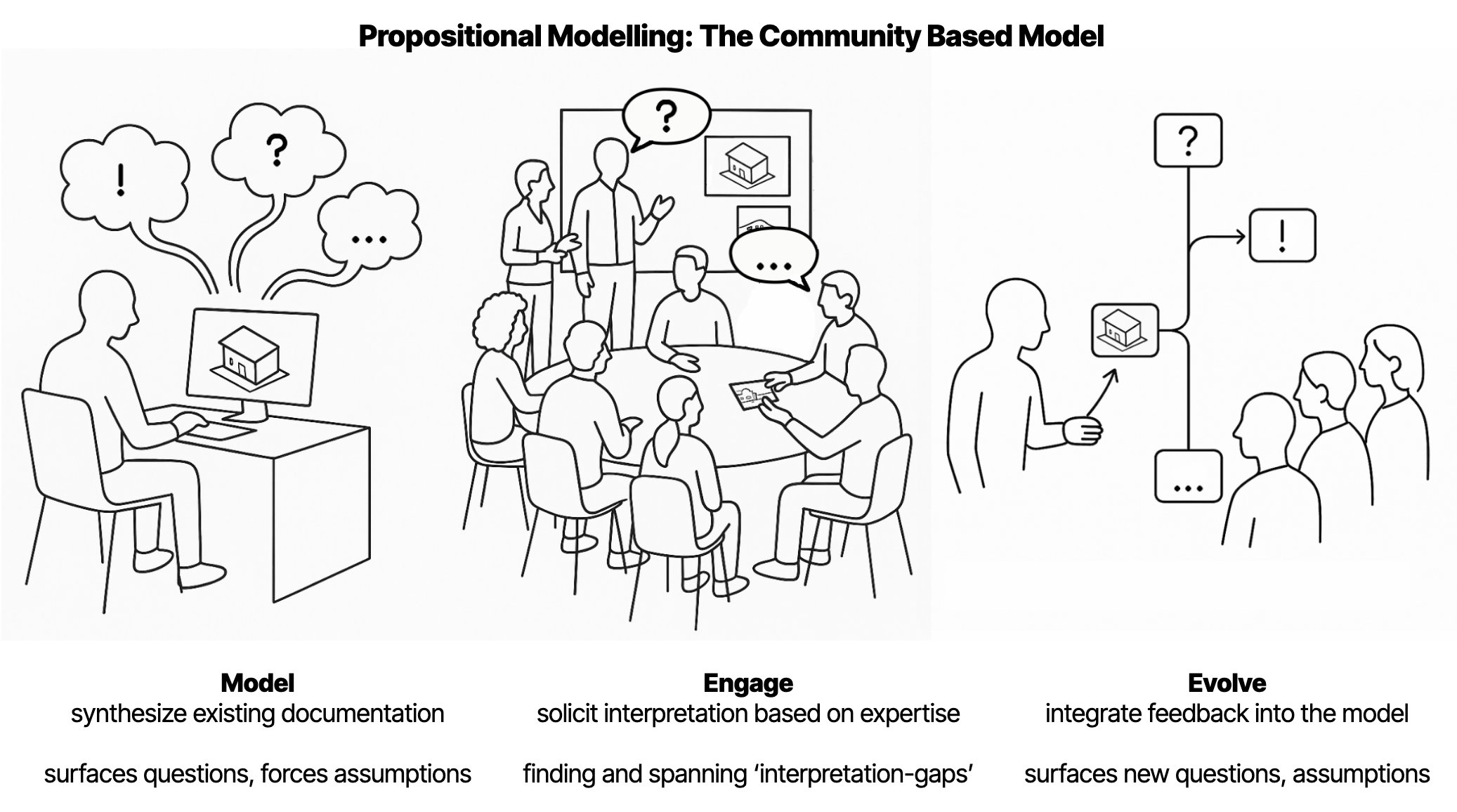
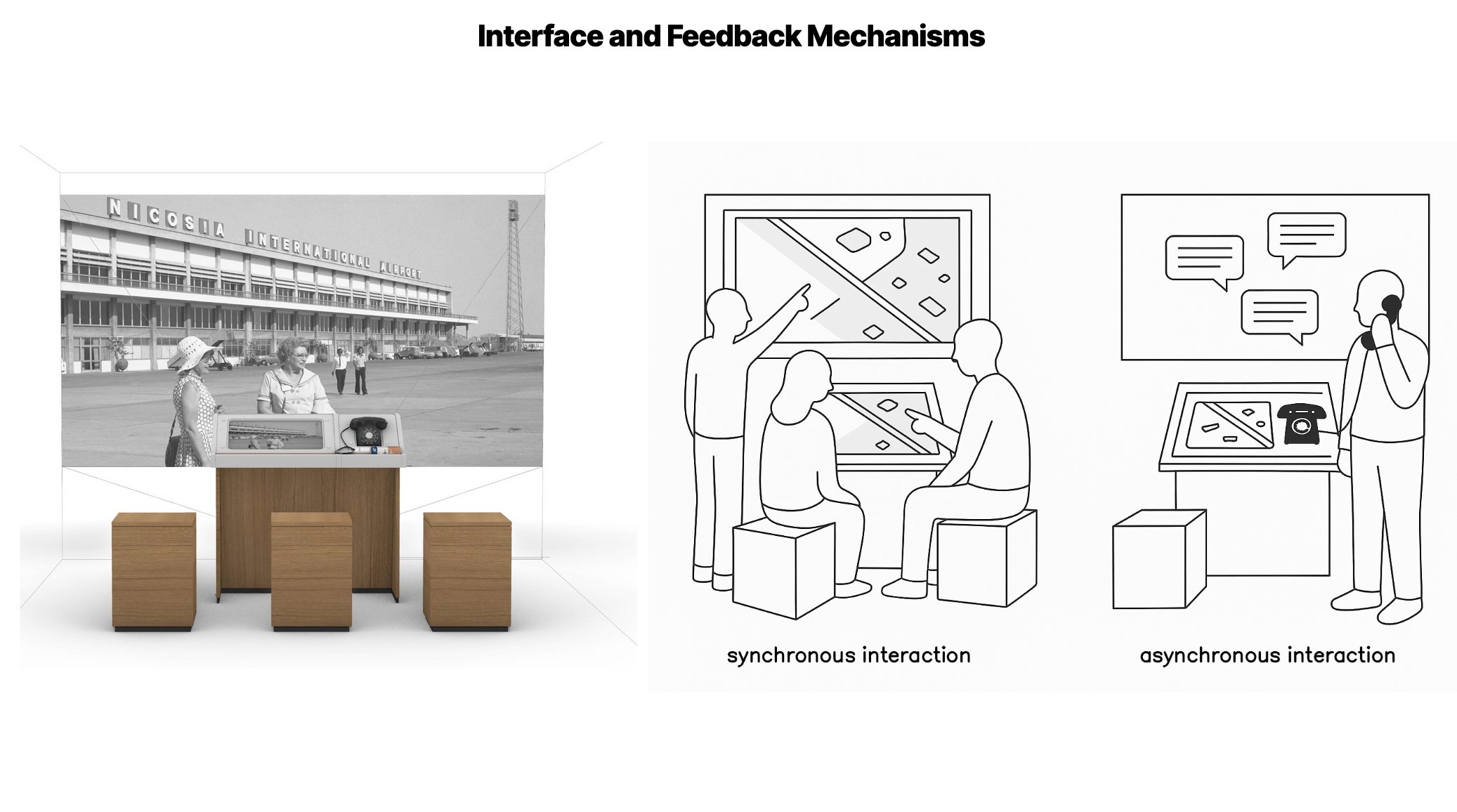
A conference presentation arguing that moving beyond photorealism to embrace representational abstraction and ambiguity can create more participatory works in digital cultural heritage. I presented this research, a core component of my dual PhD dissertation work, at the DARIAH Annual Event 2025 in Goettingen, Germany as part of the Digital Storytelling session. The full presentation materials, including slides and abstract, are archived on Zenodo ↗.
Related Projects
MetaFraming: A Methodology for Democratizing Heritage Interpretation through Wiki Surveys
A participatory methodology for heritage study using AI-assisted wiki surveys, a technology from the computational social sciences that allows the survey itself to evolve as people interact with it. I developed MetaFraming using three distinct GPT-3.5 pipelines: one generates hundreds of 'seed' propositions from background research (controlled for tone and topic), another interprets user-submitted comments by providing contextual history of their interactions, and a third automatically codes comments for sentiment and topics to speed qualitative analysis and aid abuse detection. The methodology was developed through a case study on Le Corbusier's Unité d'habitation and published as a conference paper. Read the full paper here.
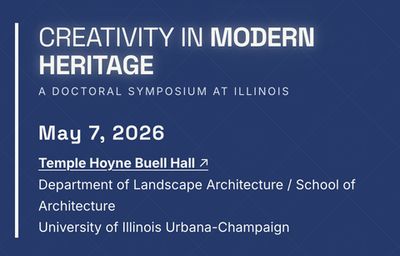
Creativity in Modern Heritage: A Doctoral Symposium
An interdisciplinary doctoral symposium on modern heritage that I co-chaired and designed the website for. Held on May 7, 2026 at Temple Hoyne Buell Hall, the event featured a keynote lecture by Hi'ilei Julia Hobart (Yale) and six papers, jointly supported by the PhD Programs in Architecture and Landscape Architecture and History + Theory + Preservation, with co-sponsors including the Unit for Criticism and Interpretive Theory, the Environmental Humanities Research Cluster, the American Indian Studies Program, and the Sawyer Seminars. I also presented my paper, 'Propositional Modeling for Digital Heritage: Committed Artifacts, Situated Knowledges,' at the symposium.
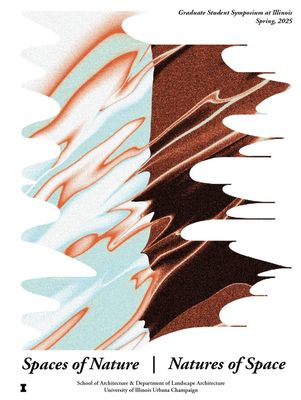
Spaces of Nature/Natures of Space Symposium
A graphic identity and website designed for the 'Spaces of Nature/Natures of Space' graduate student symposium. I created the event's visual identity and designed the official website while co-organizing the symposium with Taisuke Wakabayashi at the University of Illinois Urbana-Champaign. During the symposium, held on February 14, 2025, I presented an early draft of my research paper, 'The Interpretive Nature of Space: Generative Ambiguity in Heritage Visualization'. Abstract In architectural representation, the tension between objectivity and ambiguity opens space for interpretive engagement. Yet contemporary digital visualization practices increasingly prioritize photorealism—a pursuit that, as Lefebvre cautions, risks reducing lived space to a superficial spectacle. Drawing on research conducted at Cyprus's Virtual Environments Laboratory, this paper contends that the nature of space emerges not through visual mimesis but through the generative potential of representational ambiguity. Such an approach aligns virtual reconstructions with the deeper intellectual and cultural aims of the Digital Humanities. The Nicosia International Airport (1968), abandoned in Cyprus's UN buffer zone since 1974, exemplifies the interpretive challenges of modern architectural heritage. Here, meaning is negotiated between design intent, built form, and lived experience. More than a modernist relic of Cyprus's post-colonial aspirations, the site's abrupt abandonment transformed it into a time capsule of what de Certeau terms 'spatial practices': public terraces and amenities overlooking the tarmac once fostered forms of social life unimaginable in today's airports. With these practices now confined to living memory, methodologies are needed that integrate experiential knowledge with conventional documentation.To address this gap, we developed an approach to heritage visualization through a year-long museum installation featuring a virtual reconstruction of the airport set in 1969. By embedding carefully designed 'interpretation gaps'—strategic ambiguities in the visualization—we created a system that invites visitors to actively bridge these gaps through their contributions: memories, media, and historical knowledge. In this way, the virtual environment becomes both a research instrument and a medium for collective storytelling, supporting rather than supplanting the social practices that sustain collective memory.
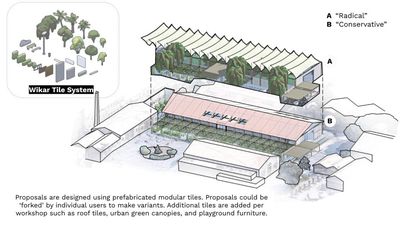
"Scan To Ar": Palermo
A co-design workshop using rapid 3D site capture and an AR design tool with a library of design primitives (akin to Lego bricks). The goal was to repurpose abandoned industrial heritage in Palermo. I collaborated with Federico La Russa to facilitate the workshop, using Wikar (my augmented reality platform) to swiftly mock up and review architectural proposals with stakeholders over a single weekend. The co-design process helped the local campus community collect a public voice for preserving the open space, and the site opened as a public space in October 2022. Conference presentation and publication documented the methodology.