Research
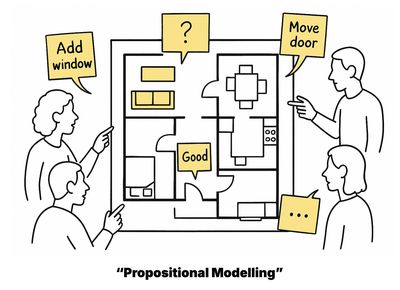
I research how playable software can produce new knowledge between scholars, institutions, and communities. Game design is a growing practice in academia and meets growing games literacy in the public, but we lack methodologies that operationalize making and play as collaborative humanistic inquiry. My dissertation contributes propositional modeling, a methodology where digital artifacts trigger divergent interpretation and accumulate what that interpretation yields, so that public play compounds knowledge scholars can’t produce alone.
About
I research how playable software can produce new knowledge between scholars, institutions, and communities. Game design is a growing practice in academia and meets growing games literacy in the public, but we lack methodologies that operationalize making and play as collaborative humanistic inquiry. My dissertation contributes propositional modeling, a methodology where digital artifacts trigger divergent interpretation and accumulate what that interpretation yields, so that public play compounds knowledge scholars can’t produce alone.
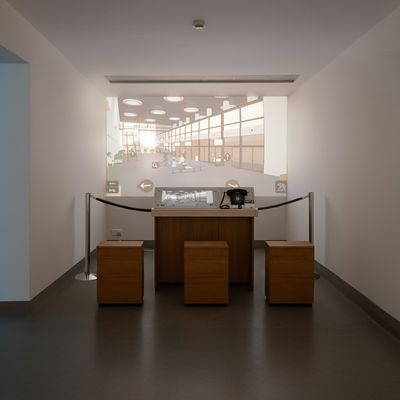
Nicosia International Airport VE
A museum installation featuring a reconstructed 3D model of Nicosia International Airport's modern terminal based on LiDAR scans and archival documentation, housed in a custom-designed wooden console with touchscreen navigation and immersive projection. I developed the participatory virtual environment to test dissertation methodologies on co-constructive virtual places for heritage, featuring a "propositional model" for directing public knowledge toward architectural features, and a period landline phone interface for oral story contribution. I also designed and developed the companion website at velab.cloud/nic/en. Deployed in a public exhibition at the Bank of Cyprus Cultural Foundation, the project captured over 3,200 play sessions and 300 oral story recordings, generating new qualitative data that expands and challenges the site's limited documentation. See the development timeline for in-progress screenshots and photos.
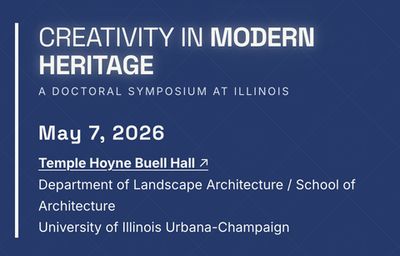
Creativity in Modern Heritage: A Doctoral Symposium
An interdisciplinary doctoral symposium on modern heritage that I co-chaired and designed the website for. Held on May 7, 2026 at Temple Hoyne Buell Hall, the event featured a keynote lecture by Hi'ilei Julia Hobart (Yale) and six papers, jointly supported by the PhD Programs in Architecture and Landscape Architecture and History + Theory + Preservation, with co-sponsors including the Unit for Criticism and Interpretive Theory, the Environmental Humanities Research Cluster, the American Indian Studies Program, and the Sawyer Seminars. I also presented my paper, 'Propositional Modeling for Digital Heritage: Committed Artifacts, Situated Knowledges,' at the symposium.
Constraints, Not Freedom: Designing Virtual Environments for Distributed Co-Creation
A poster and live-demo presentation at the IMMERSE Symposium 2026 (April 28-29, University of Illinois Urbana-Champaign), introducing five productive constraint patterns - spatial, propositional, relational, technical, thematic - as a typology for designing user-generated-content systems. Drawing on a decade of design-research across Nicosia International Airport VE, C.H.A.I.N. 3, Soap Soup, the Haunted PS1 demo discs, and Wikar, the work argues that maximizing user freedom can paradoxically undermine the creative economy in which participants engage. The booth presented two live demos: Soap Soup (technical constraint) on a CRT and the Nicosia Airport VE (propositional constraint) on a laptop. Supplement page hosts the full abstract, partner credits, analogous-pattern links, and project context.
Generative Ambiguity in Heritage Visualisation
A conference presentation arguing that moving beyond photorealism to embrace representational abstraction and ambiguity can create more participatory works in digital cultural heritage. I presented this research, a core component of my dual PhD dissertation work, at the DARIAH Annual Event 2025 in Goettingen, Germany as part of the Digital Storytelling session. The full presentation materials, including slides and abstract, are archived on Zenodo.
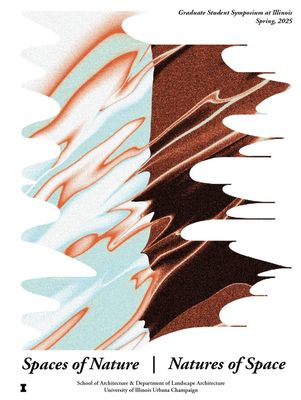
Spaces of Nature/Natures of Space Symposium
A graphic identity and website designed for the 'Spaces of Nature/Natures of Space' graduate student symposium. I created the event's visual identity and designed the official website while co-organizing the symposium with Taisuke Wakabayashi at the University of Illinois Urbana-Champaign. During the symposium, held on February 14, 2025, I presented an early draft of my research paper, 'The Interpretive Nature of Space: Generative Ambiguity in Heritage Visualization'. Abstract In architectural representation, the tension between objectivity and ambiguity opens space for interpretive engagement. Yet contemporary digital visualization practices increasingly prioritize photorealism—a pursuit that, as Lefebvre cautions, risks reducing lived space to a superficial spectacle. Drawing on research conducted at Cyprus's Virtual Environments Laboratory, this paper contends that the nature of space emerges not through visual mimesis but through the generative potential of representational ambiguity. Such an approach aligns virtual reconstructions with the deeper intellectual and cultural aims of the Digital Humanities. The Nicosia International Airport (1968), abandoned in Cyprus's UN buffer zone since 1974, exemplifies the interpretive challenges of modern architectural heritage. Here, meaning is negotiated between design intent, built form, and lived experience. More than a modernist relic of Cyprus's post-colonial aspirations, the site's abrupt abandonment transformed it into a time capsule of what de Certeau terms 'spatial practices': public terraces and amenities overlooking the tarmac once fostered forms of social life unimaginable in today's airports. With these practices now confined to living memory, methodologies are needed that integrate experiential knowledge with conventional documentation.To address this gap, we developed an approach to heritage visualization through a year-long museum installation featuring a virtual reconstruction of the airport set in 1969. By embedding carefully designed 'interpretation gaps'—strategic ambiguities in the visualization—we created a system that invites visitors to actively bridge these gaps through their contributions: memories, media, and historical knowledge. In this way, the virtual environment becomes both a research instrument and a medium for collective storytelling, supporting rather than supplanting the social practices that sustain collective memory.
The People's Sky 2
The fifth iteration of the People's Tree series—where players design items and place them in a shared digital space—developed as the centerpiece for the 2025 Madvent launcher. I was invited by the junior team—who had taken over the launcher technology and coordination—to contribute this game for continuity with the series. My contributions focused on technical refinement: redesigning and optimizing the input system for better panning and zooming, recoloring and reskinning the visual aesthetic, and optimizing data serialization and loading sequences. The project marks my transition from lead developer to technical consultant as the junior team took over coordination.
Paphos Gate: Nicosia
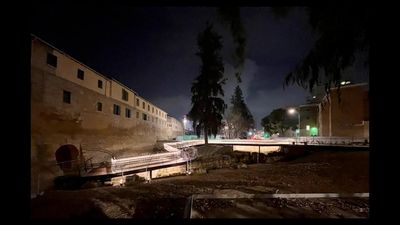
Multiple VR applications (using Oculus DK2 and HTC Vive) to visualize archaeological findings and a proposed architectural intervention for an urban archaeology project in Nicosia. I prototyped and built the applications as a research assistant, developing systems for locomotion, interaction, and gaze-tracking analytics to understand how stakeholders focused on the virtual site. These tools engaged everyone from the public to the Department of Antiquities. The gaze-tracking data directly informed the design of the final public walkway and was integrated into the permanent VR exhibit at the museum. The project spanned a decade before the site and its permanent VR exhibit opened to the public in 2024.
Quantum Itineraries Live Visuals
A suite of tools and visualizations in Unity for live-generated 3D visuals projected behind performers at 8K for dome or classical displays, using procedurally generated meshes and shaders. I built the system for the Quantum Itineraries music performances, a festival featuring quantum computer music where quantum simulations are core to composition and instrumentation. The quantum simulation data that generated the music also drove the visuals directly, with WebRTC routing Unity's output to a mixer for the projection.
Experimental Games Workshop
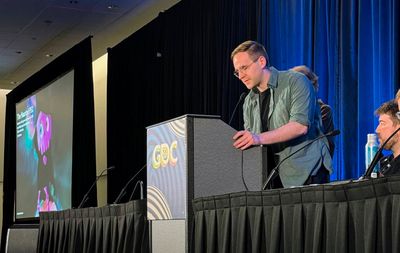
A presentation at the Experimental Games Workshop (EGW), held during the Game Developers Conference (GDC) in San Francisco. With co-presenter Adam Pype, I discussed our project C.H.A.I.N.G.E.D. and the collaborative work of the Haunted PlayStation 1 collective. The EGW is a GDC tradition of over 20 years that showcases games at the forefront of gameplay, organization, and creative direction. A full video is available in the GDC Vault, linked above.
Are Surveys Necessary? Designing Virtual Environments for Participatory Research
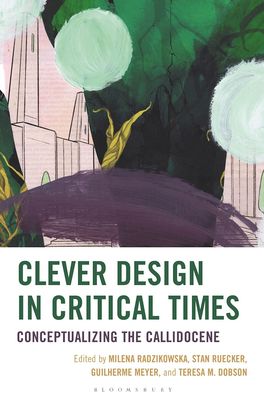
A prototype Virtual Environment (VE) designed as an immersive online 'guest book' where hundreds of users could asynchronously decorate a shared virtual space and leave messages for one another. I developed this VE for a workshop on the intangible cultural heritage of Córdoba's communal patios, introducing key design strategies for asynchronous interaction ('claims' and 'traces') and a novel workflow using Large Language Models (LLMs) to automate qualitative coding and moderation of text contributions. Published as a book chapter in the 2025 Bloomsbury Academic volume, Clever Design in Critical Times: Conceptualizing the Callidocene, arguing that interactive VEs can serve as effective tools for participatory research beyond traditional surveys in the Digital Humanities. The book is available from Bloomsbury Academic.
MESH AIRFLOW Visualization
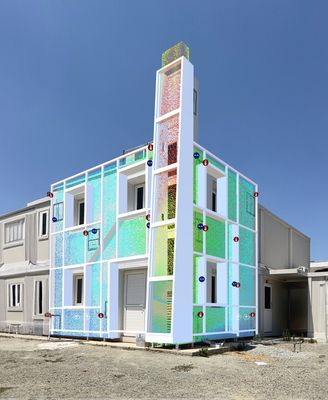
An AR visualization of airflow patterns for a secondary facade system designed by the Cyprus Institute. I took the researchers' 2D computational fluid dynamics (CFD) simulations (heat and flow maps) and UV mapped them onto a 1:1 scale 3D model of the facade, then built a shader to animate these maps with particles, inspired by how Portal 2 visualizes fluid dynamics. In the final application, users scan a QR code on the test building and see the internal 'stack effect' in action, with callouts indicating sensor locations.
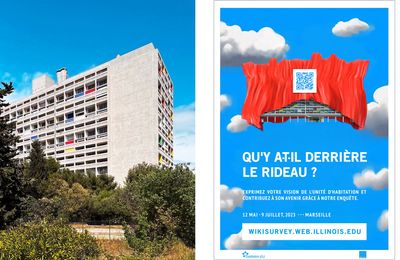
Unité d'Habitation Wikisurvey
A wiki survey tool—a survey format where participants both vote on and submit new options, so the survey evolves as people interact with it. This implementation draws on two prior systems (All Our Ideas and POLIS) and adds AI-assisted seed generation and automated qualitative coding. I developed this web application as part of the MetaFraming research.
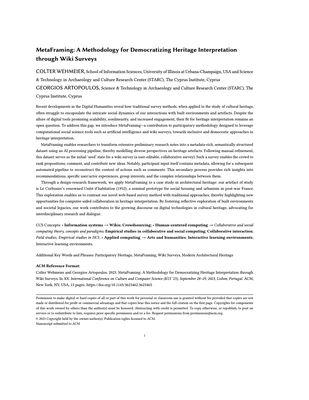
MetaFraming: A Methodology for Democratizing Heritage Interpretation through Wiki Surveys
A participatory methodology for heritage study using AI-assisted wiki surveys, a technology from the computational social sciences that allows the survey itself to evolve as people interact with it. I developed MetaFraming using three distinct GPT-3.5 pipelines: one generates hundreds of 'seed' propositions from background research (controlled for tone and topic), another interprets user-submitted comments by providing contextual history of their interactions, and a third automatically codes comments for sentiment and topics to speed qualitative analysis and aid abuse detection. The methodology was developed through a case study on Le Corbusier's Unité d'habitation and published as a conference paper. Read the full paper here.
The People's Sky
The fourth iteration of the People's Tree series, The People's Sky is an experimental game where players design items, append messages, and place them in a shared digital sky. A key design change was constraining the color palette to reduce the visual cacophony of earlier iterations. I also developed data-transfer optimizations, analytic logs for post-experiment analysis, a web application for content moderation, and 'trace' visualizations that passively record and display player exploration paths.
BEEP Energy Sim
An AR energy-use visualization that lets stakeholders view expected energy loads for every room in a heritage building over the year using a phone or tablet. A slider scrubs through a full year of data, built to explain green infrastructure investments for the adaptive reuse project. More information on the project can be found here.Technical: I baked 3D room volumes into an optimized mesh whose vertex UVs encode positions on a packed lookup texture for GPU-driven animation without CPU overhead. The project also showcased Wikar's 3D section slicer, which recomposes standard shaders into slicable equivalents using 3D SDF intersections with a stencil pass for back-face fill.
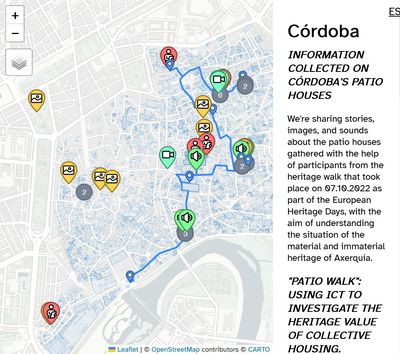
"Patio Walk": Córdoba
A pair of web applications for a Dariah Udigish Working Group project on the intangible cultural heritage of Córdoba's communal patios. The first was a site-specific recording tool for field workers that automatically linked photos, texts, audio interviews, and surveys to their GPS locations in a GIS database. The second was an interactive map-based visualization that displayed all collected materials overlaid on the city's patios. As a member of the working group, I was responsible for the design and development of both the data collection and final visualization tools.
Memory In Uncertainty
A New Design Congress report exploring the techno-political implications of web archiving practices, focusing specifically on our contradictory impulses to both preserve web culture at scale, and also respect people's right to be forgotten. I contributed as a reviewer for the public release, which built out from several private reports produced by NDC. Also featured in the Neural Networks contributor archive.
Eva Schlegel
Public AR installations for artist Eva Schlegel's studio, featuring complex custom shaders developed by her team. My role was to provide the technical education and platform support to make this possible. I extended the Wikar platform with new capabilities specifically for this project, including support for stencil shaders, UI compositing, and safeguarding access to camera textures and other rendering features that Unity would typically strip from a build.
Other Matter
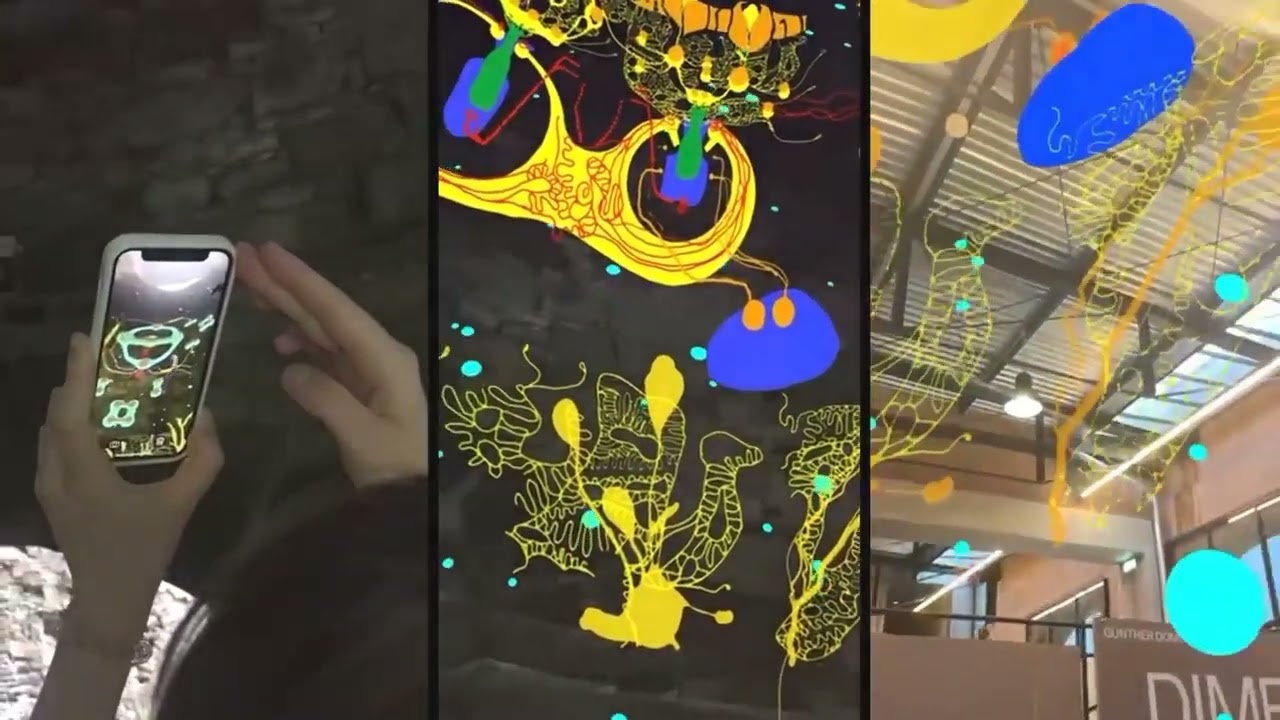
An AR exhibition with Valerie Messini and her students at the University of Applied Arts in Vienna. To support the students' creation of interactive and reactive sculptures, I extended the Wikar platform with several new features. This included more robust QR code scanning (improving reliability for inverted codes), expanded UI customization options, and a set of "interaction primitives" that students could use for proximity-based events or custom user controls. A video of the exhibition can be seen here.
Augmented Dreams: AR Sculpture Park
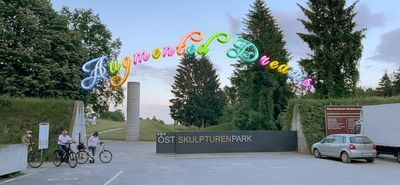
An AR sculpture park for a public exhibition in Graz, Austria, layering digital works by MFA students onto an existing physical sculpture park. As the selected technical producer, I provided Wikar for its openness and spatial accuracy. The students created site-specific works, some of which extended existing physical sculptures in interesting ways. To meet the high demand for documentation from both students and visitors, I improved Wikar's performance and added new photo and video recording capabilities to the app.
"Scan To Ar": Palermo
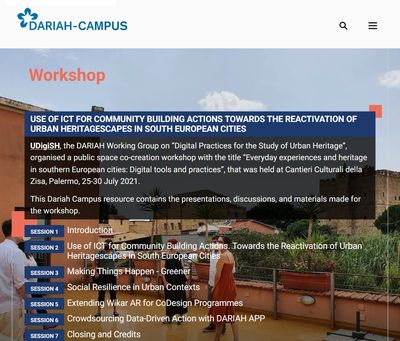
A co-design workshop using rapid 3D site capture and an AR design tool with a library of design primitives (akin to Lego bricks). The goal was to repurpose abandoned industrial heritage in Palermo. I collaborated with Federico La Russa to facilitate the workshop, using Wikar (my augmented reality platform) to swiftly mock up and review architectural proposals with stakeholders over a single weekend. The co-design process helped the local campus community collect a public voice for preserving the open space, and the site opened as a public space in October 2022. Conference presentation and publication documented the methodology.
Córdoba Court
Córdoba Court is a social game I designed and developed as the third iteration of the People's Tree series, modeled after the communal patios of Córdoba, Spain. Players cultivate a shared virtual environment by designing personalized totems from a combinatorial system of parts. The project was released simultaneously through the Haunted PS1 community and as part of the DARIAH Udigish Working Group's survey on Córdoba's communal patios, serving as a social experiment in shared digital space and community greening. A report is also available, which analyzes player content and observed behaviors.
ICT For Urban Heritage: Palermo
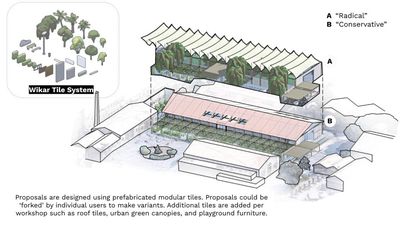
A co-design workshop in Palermo to envision the future of an abandoned warehouse, serving as the first field test for my dissertation research on propositional modeling. I designed two competing architectural proposals (conservative and radical) and used my AR platform, Wikar, to allow local stakeholders to view them on-site. By testing the proposals at different scales (a 1:500 map vs. 1:1 walkthroughs), the process surfaced the community's deep attachment to the site's recent, unwritten history as a local park. This visualization work gave their tacit knowledge an empirical basis, and the feedback directly informed the final design, which preserved the area as a public plaza.
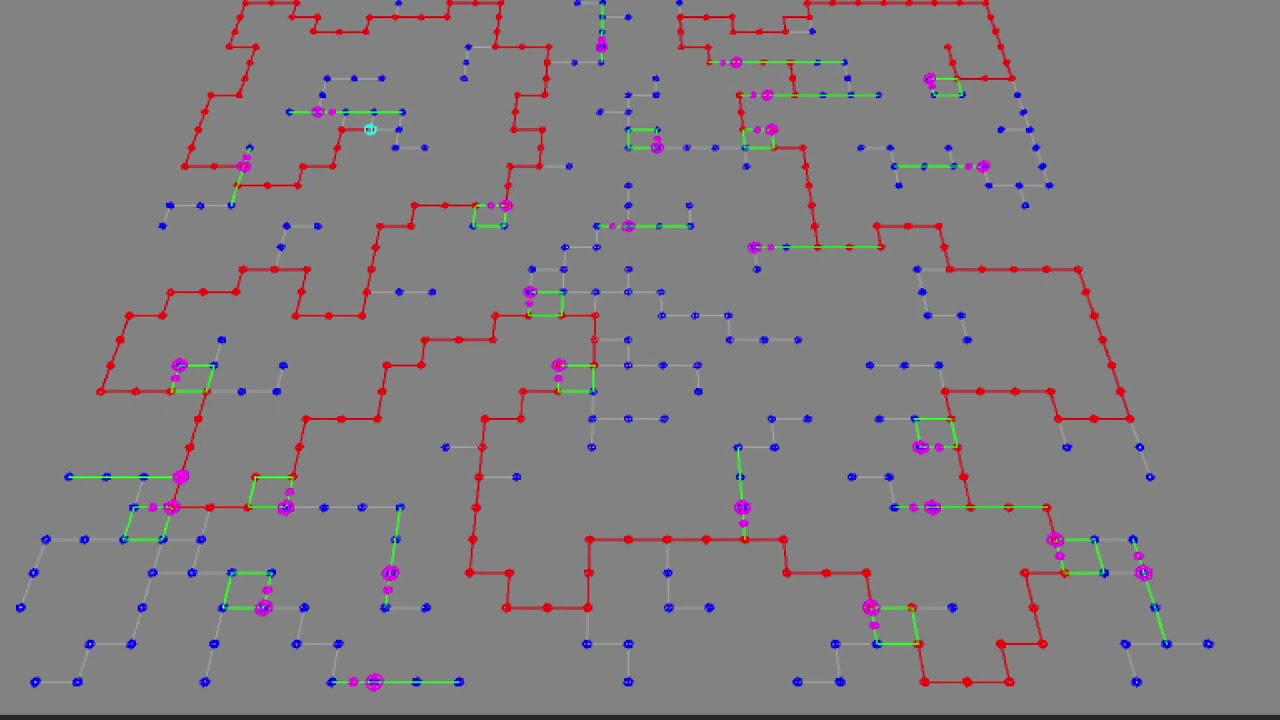
Puzzle Generation
A dungeon generator where monsters trawl on fixed and cyclical paths, creating a looping temporal structure where an agent attempts to reach the end in the shortest amount of forward steps. I developed this using Dijkstra's shortest path algorithm to solve for a sequence of moves in time rather than a shortest traversal path in space, as a final project for a course in algorithmic design.
The People's Tree 2
The second iteration of the People's Tree project, an experimental game where participants design ornaments and leave messages on a communal tree in a shared digital space. For this iteration, I rebuilt the underlying technology, expanded content moderation policies, and added more detailed analytics on player behavior.
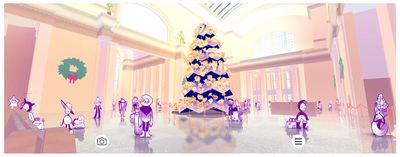
Where's Home?
An experimental game prototype conceived as the next evolution of the People's Tree series. Where previous iterations had players designing ornaments for a shared space, this version reimagined the format around NPCs: players meet characters throughout an abstracted version of Union Station in Chicago, ask them questions, and contribute answers that populate other players' encounters—so the station gradually fills with player-authored characters to discover. The game translated the unshaded, minimalist aesthetic of Rococo into a more detailed architectural style. For the prototype, I developed a custom Rhinoceros plugin to export modular architectural elements, and a separate system to place around 100 unique characters throughout the scene. The project was shelved to allow for more design iteration on its dialogue system.
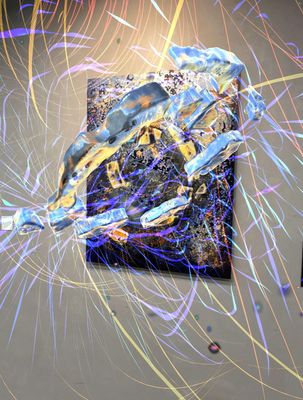
CryoLumens
An AR artwork representing the strength and location of Earth's magnetic fields using NASA's real-time sensor network, overlaying data-driven particle systems on an original painting using image tracking. When viewed through a phone, the painting comes alive with particles that shift and flow based on live magnetic field data. I developed the coding and visuals for Eli Joteva.Technical: Live sensor intensities are baked into packed textures so particles animate by interpolating a texture index on the GPU, keeping the visualization real-time without CPU overhead.
Earth Vis
An experiment in converting NASA climate data into a real-time VFX graph visualization. For this project, I built a system in Unity where a compute shader drives particles across a globe in polar coordinates, sampling precomputed flowmaps for wind speed and direction, while their trails change color based on temperature.
Minotaur
Minotaur is a digital marble maze inspired by the classic BRIO Labyrinth board game, where players tilt a board to navigate a ball around holes. It also served as my earliest experiment with embedded analytics—I built a system that records play sessions and sends summary data to a Clowder data repository. This work enabled long-term data collection, and the results from over three years and thousands of play sessions are analyzed in this report.
The People's Tree
The People's Tree was the first in a series of experimental games I created to explore community building in networked spaces. In this project, players design ornaments and leave messages on a shared tree. It was my first opportunity to build the underlying technology, develop content policies, and run analytics for a live, public-facing application. A key finding from this and subsequent projects was an unexpectedly high player return rate of 15-30%, suggesting that players felt a personal stake in the collectively-designed artifact and returned to observe its evolution.
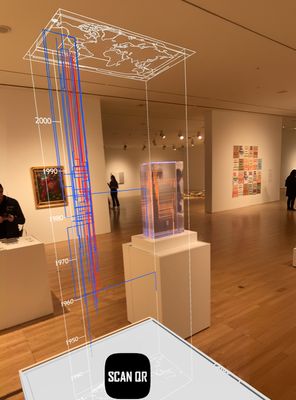
Timeline Atlas
Two AR data-visualization sculptures visualizing datasets too complex to depict through physical sculpture: the home locations of all female senators over the past century. I collaborated with artist Stephen Cartwright, known for meticulously logging personal data over decades and crafting it into acrylic sculptures that exhibit spatial-temporal patterns. We used AR to go beyond his traditional manufacturing techniques. Debuted as part of a faculty showcase in 2019.
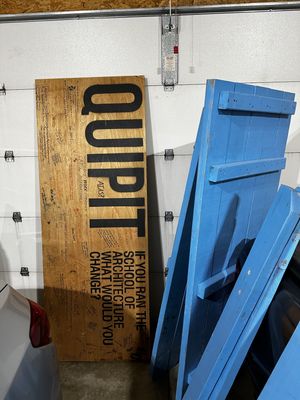
Quipit Student Survey
A participatory table installation in the school's atrium that challenged passersby with the question: What would you change if you ran the school? Over a month, the table filled with students' handwritten responses. QUIPIT—a student group in the University of Illinois' School of Architecture, with Ray Majewski, Christian Pepper, and Robert Prochaska—then held a student event to discuss the responses and presented findings to the school's director. Part of our ongoing use of tongue-in-cheek installation art to open conversation among students, faculty, and administration.