
Unité d'Habitation Wikisurvey
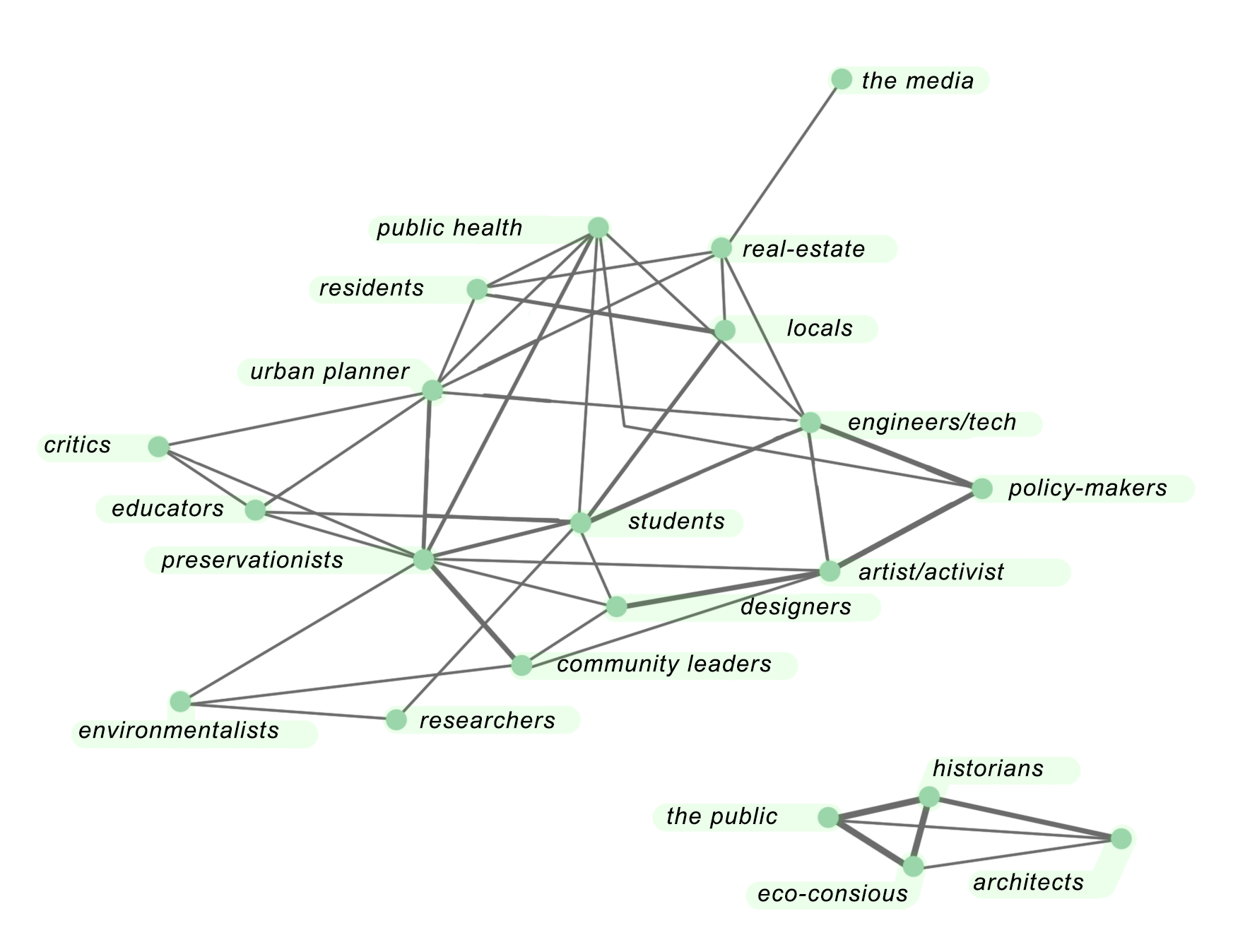
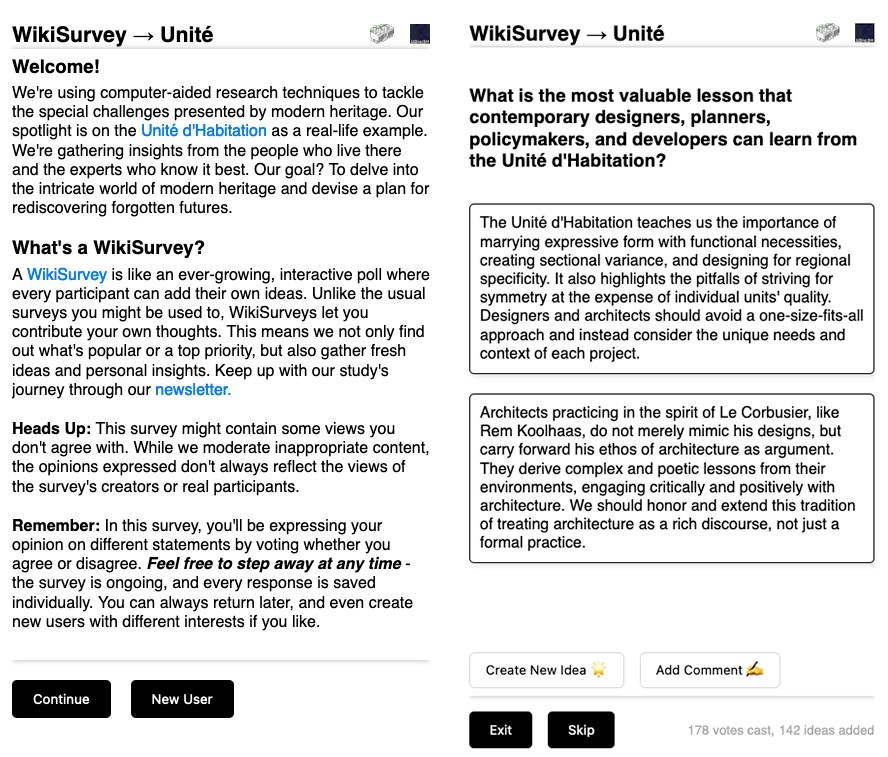
A wiki survey tool ↗—a survey format where participants both vote on and submit new options, so the survey evolves as people interact with it. This implementation draws on two prior systems (All Our Ideas and POLIS) and adds AI-assisted seed generation and automated qualitative coding. I developed this web application as part of the MetaFraming research.
Related Projects

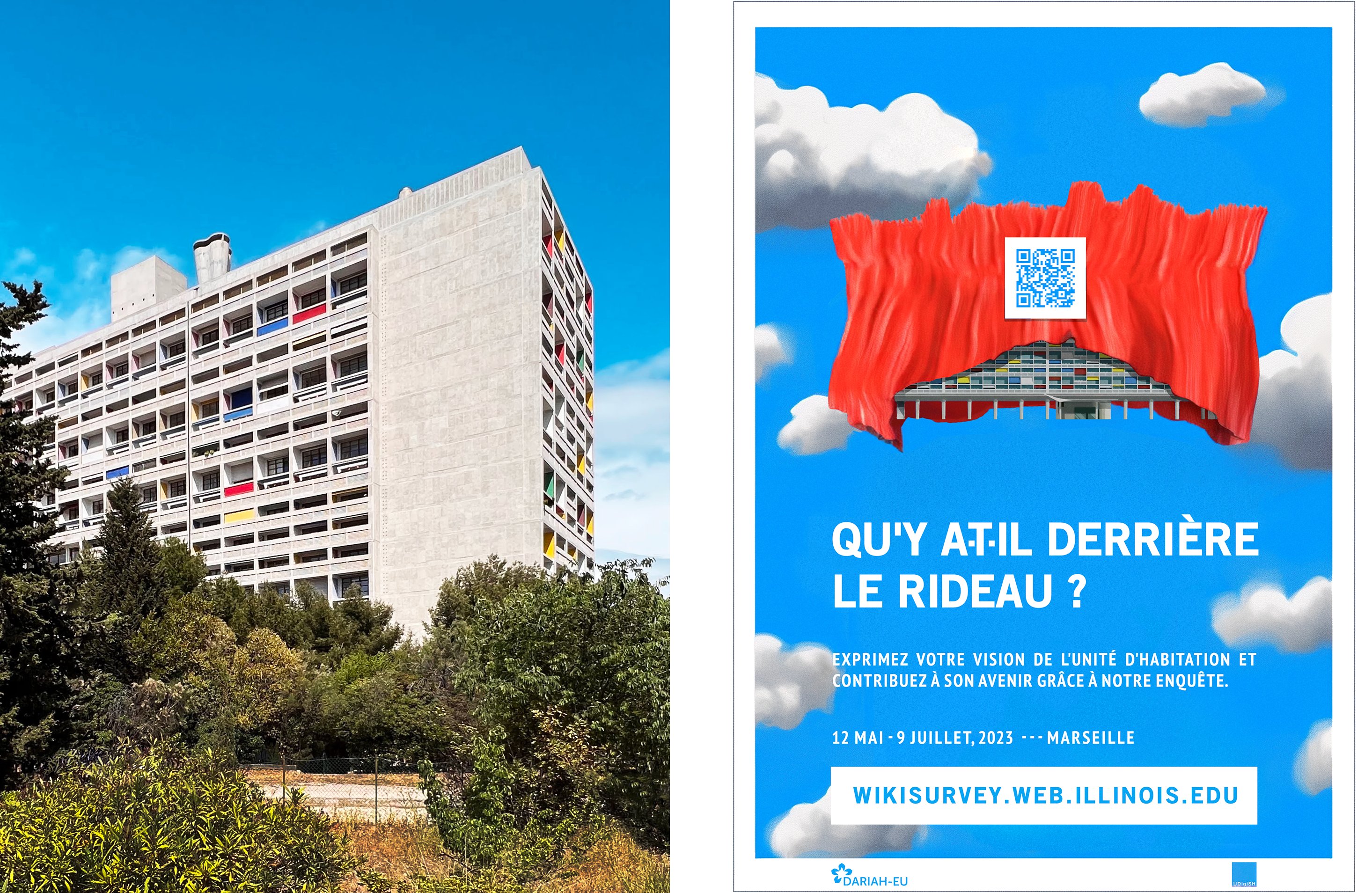
Unité d'Habitation Poster
A poster with basic information, a QR code, and URL using a simple visual element to imply mystery. We designed this to draw exhibition visitors to our wiki survey on public perceptions of Le Corbusier's Unité d'Habitation.
MetaFraming: A Methodology for Democratizing Heritage Interpretation through Wiki Surveys
A participatory methodology for heritage study using AI-assisted wiki surveys, a technology from the computational social sciences that allows the survey itself to evolve as people interact with it. I developed MetaFraming using three distinct GPT-3.5 pipelines: one generates hundreds of 'seed' propositions from background research (controlled for tone and topic), another interprets user-submitted comments by providing contextual history of their interactions, and a third automatically codes comments for sentiment and topics to speed qualitative analysis and aid abuse detection. The methodology was developed through a case study on Le Corbusier's Unité d'habitation and published as a conference paper. Read the full paper here.
360 Visualizer
A web tool for creating immersive 360 degree panoramas with text and recorded sound for exhibitions, working in all major browsers and using device compass/gyro (or click and drag) to rotate the panorama intuitively. I developed this for the Cyprus Institute. A demo can be found here.
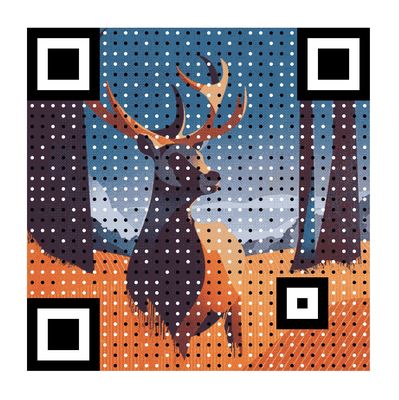
Better Qr Codes
A custom Python pipeline that embeds full-color images into QR codes while maintaining scannability with standard phone cameras. The technique works by deconstructing a generated QR code into its cellular data. While preserving the critical landing markers, the pipeline reconstructs the data-carrying portions of the code as an image. It overlays this image with a pattern of fine dots, calibrated to manipulate the average luminance within each cell. This ensures that when a scanner samples the cells, it correctly reads them as light or dark, preserving the original data while making the embedded image visible to the human eye.