Sloppy Joe
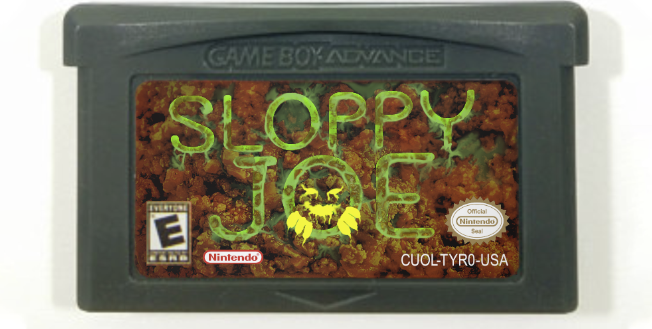
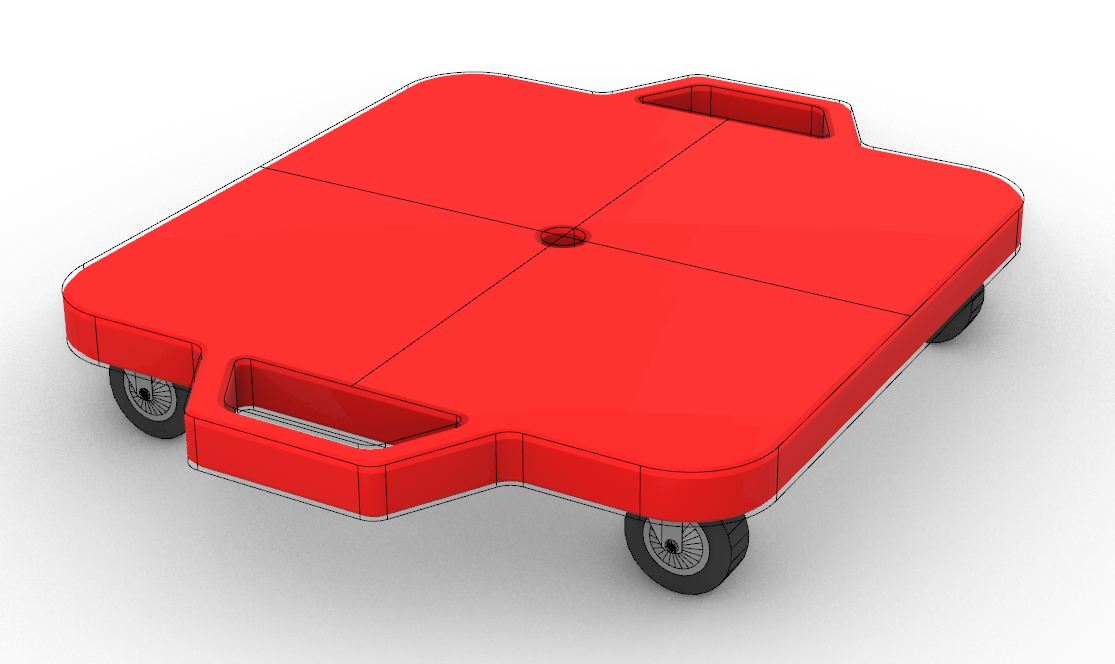
A prototype for a dungeon crawler set in the world of Rococo (my earlier surreal kitchen platformer), created to test a unique ground-based movement mechanic. In this demo, I implemented a system where the player navigates on a rolling seat, bouncing off walls and turning in 90-degree increments. The project was also an experiment in pushing the Rococo aesthetic in a darker visual direction. The prototype can be played here. ↗
Related Projects
Where's Home?
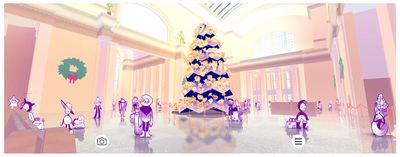
An experimental game prototype conceived as the next evolution of the People's Tree series. Where previous iterations had players designing ornaments for a shared space, this version reimagined the format around NPCs: players meet characters throughout an abstracted version of Union Station in Chicago, ask them questions, and contribute answers that populate other players' encounters—so the station gradually fills with player-authored characters to discover. The game translated the unshaded, minimalist aesthetic of Rococo into a more detailed architectural style. For the prototype, I developed a custom Rhinoceros plugin to export modular architectural elements, and a separate system to place around 100 unique characters throughout the scene. The project was shelved to allow for more design iteration on its dialogue system.
Rococo
Rococo is my first complete game, built solo in two weeks for the Haunted PS1 Summer of Screams jam. The player bounces on a jelly-like linoleum floor through a child's dream of a deconstructed kitchen, reaching for a floating jar of cookies. Two inputs, three minutes — I focused on making the single interaction feel complete — custom shaders create an unlit, candy-colored look, and a physics-driven sound system ties audio to the player's motion. An epilogue was added days after release in response to players wanting to stay in the world. Rococo reached 4.6★ across 218 ratings with 109 comments over five years of organic discovery — more individual ratings than any Haunted PS1 collective release except the two flagship Demo Discs.
Wikar V1
The initial prototype for Wikar, an AR app I designed for viewing cloud-hosted media like artworks and design proposals. During an affiliation with the National Center for Supercomputing Applications' (NCSA) Advanced Visualization Laboratory, I developed this first version to use NCSA's Clowder data repository for storing and distributing Unity asset bundles. The system uses QR codes for URL lookup and precise positioning, enabling multi-user, location-integrated experiences. The project, which received financial support from eDream and the Fiddler Foundation, has since been used by international artists, researchers, architects, and students.
Minotaur
Minotaur is a digital marble maze inspired by the classic BRIO Labyrinth board game, where players tilt a board to navigate a ball around holes. It also served as my earliest experiment with embedded analytics—I built a system that records play sessions and sends summary data to a Clowder data repository. This work enabled long-term data collection, and the results from over three years and thousands of play sessions are analyzed in this report.